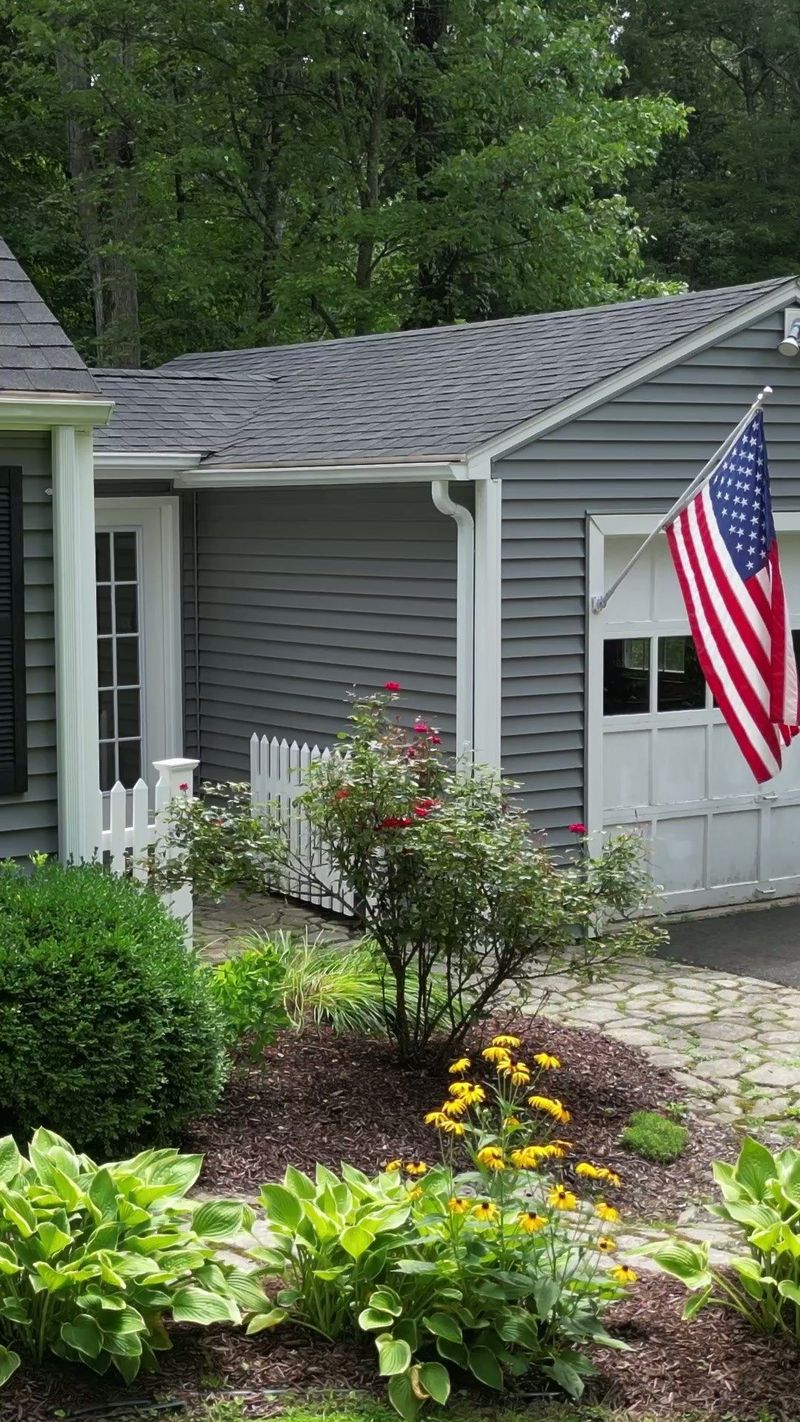
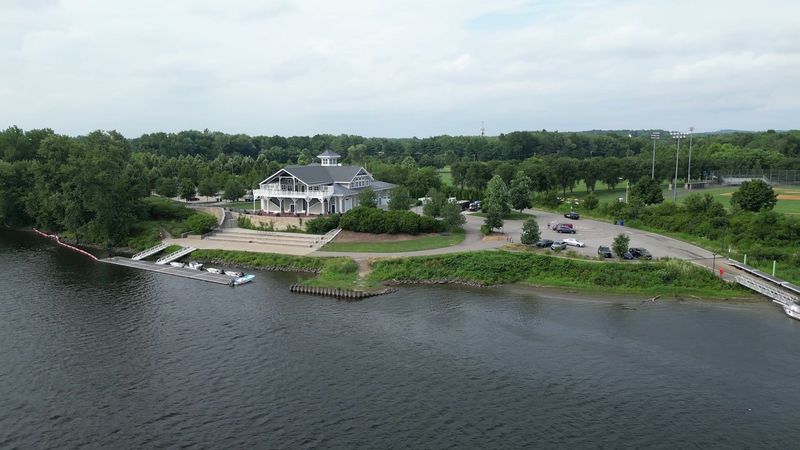
Most community films are short. This one runs eight minutes and forty-five seconds, and that length changes what it can do. A host with a handheld microphone walks through West Hartford, stops to talk with people, drifts from daytime into evening, and lets the viewer take in streets, trees, rooftops and restaurants at a conversational pace.
6 minute read
A long film built from conversations
The setting is West Hartford, Connecticut, and the host is Robyn, who is the one constant across the whole film. She appears on camera holding a microphone, and the microphone tells the viewer what kind of film this is before a word is spoken: it is a film about people talking, not a film about scenery with music laid over it.
At 8:45, it is a long film by web standards, and that is the first design fact worth understanding. A one-minute community video can only introduce a place. A film this long can sit with it. It can leave a conversation running, return to the host, show a street in daylight and the same kind of street in the evening, and trust the viewer to stay with it because the next change of scene is always a few minutes away.
The rest of this page follows the film from start to finish, using five frames from it, and looks at the choices that hold such a long piece together.
The host on a shopping street
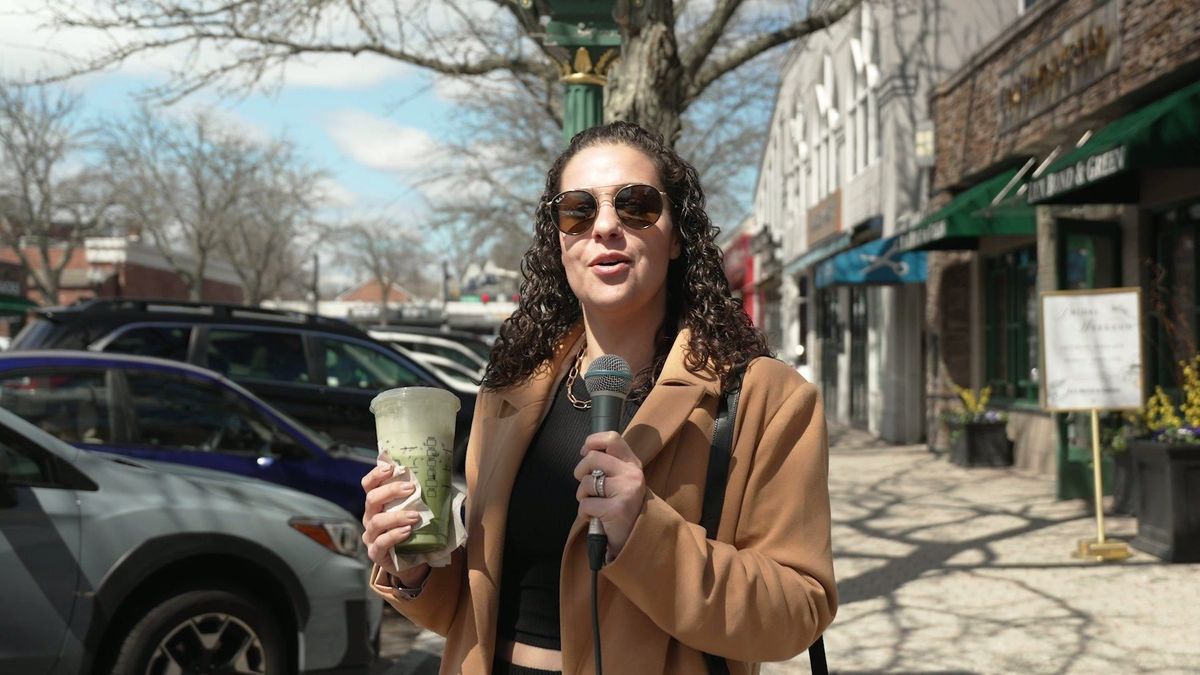
About eleven seconds in, Robyn is on a West Hartford shopping street, speaking to the camera with her microphone in hand. This is the film’s first anchor. The viewer sees who is guiding them, sees the kind of place they are in, and sees the activity of a commercial street behind her before any conversation begins.
An on-camera host does a job that voice-over cannot. She tells the viewer where they are by standing in it. Her position in the frame, her eye line and the way she holds the microphone give the film a human scale, and every later scene is measured against that: are we still with her, are we with someone she is talking to, or are we looking at the town from somewhere she is not?
In a film for a real estate agent, this opening also does quiet branding work. The host is the person a viewer will associate with the town after the film ends, and the street she stands in is the first place the film asks the viewer to imagine spending time.
Talking with a group on the sidewalk
The frame chosen as this page’s poster comes from about two minutes twenty seconds in. Robyn is interviewing a group on a West Hartford sidewalk. Several people stand together, the host holds the microphone toward them, and the street continues behind them.
A group interview is harder to frame than a single guest and more interesting to watch. The viewer sees several faces react at once, hears different voices, and gets the sense of a gathering rather than a statement. The film’s long runtime gives these exchanges room to breathe, so a conversation can feel like a conversation instead of a sound bite.
What the finished film offers is the chance to hear from the people on screen while seeing the setting around them. The words belong to the guests, and the film is the place to hear them.
A change of pace in a park
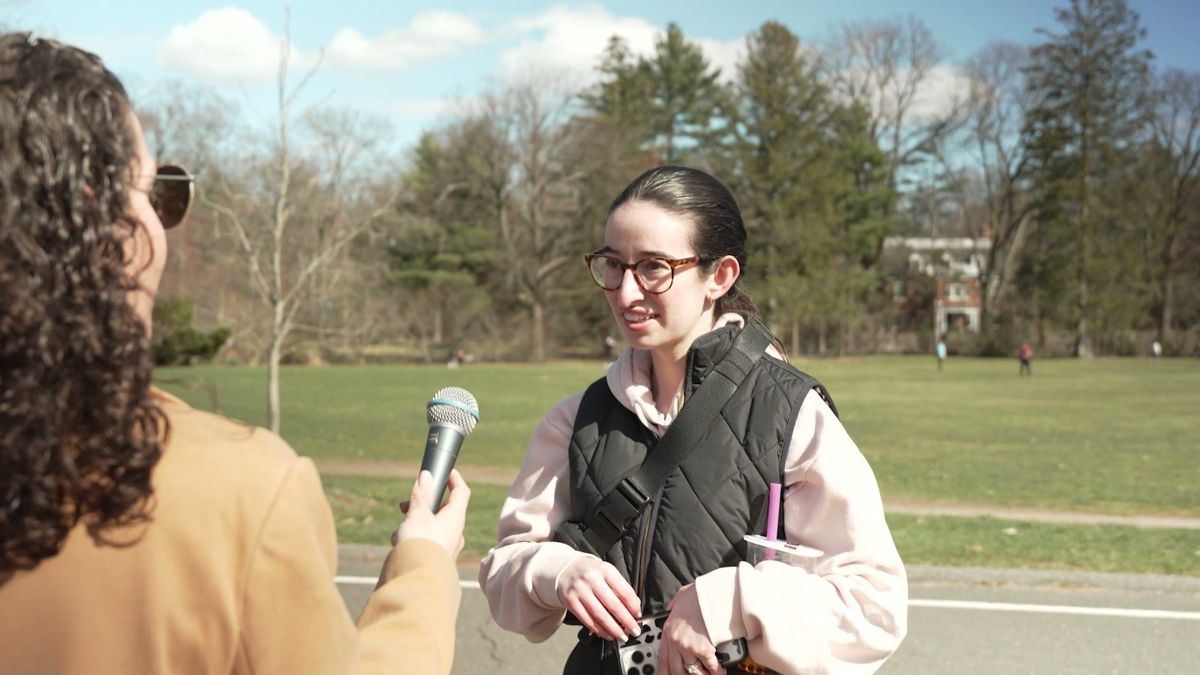
At about three minutes fifty seconds, the film leaves the street. A guest speaks with Robyn in a park, with trees and open ground around them. After a stretch of sidewalk conversations, this is a deliberate change of rhythm. The background is green, the light is different, and the pace of the conversation changes with it.
The film also includes a stone arch in a garden or park setting, where host and guest stand together. Settings like this give a conversation a visual anchor. The viewer is no longer watching two people on a pavement; they are watching two people in a place with its own character, and the place becomes part of what the film says about the town.
For anyone planning a community film, the lesson is practical. Choose conversation locations that look different from one another. Repeating the same kind of background for eight minutes would flatten the film. Alternating streets, planted spaces and more open areas keeps each new scene recognizable as a new scene.
Homes and streets from the air
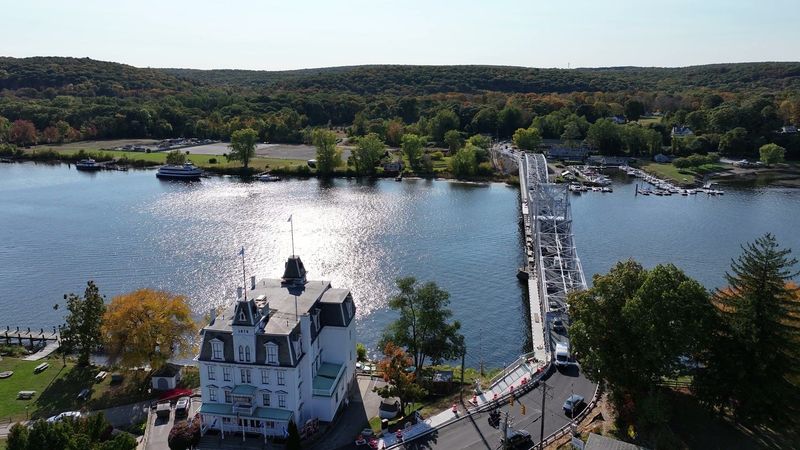
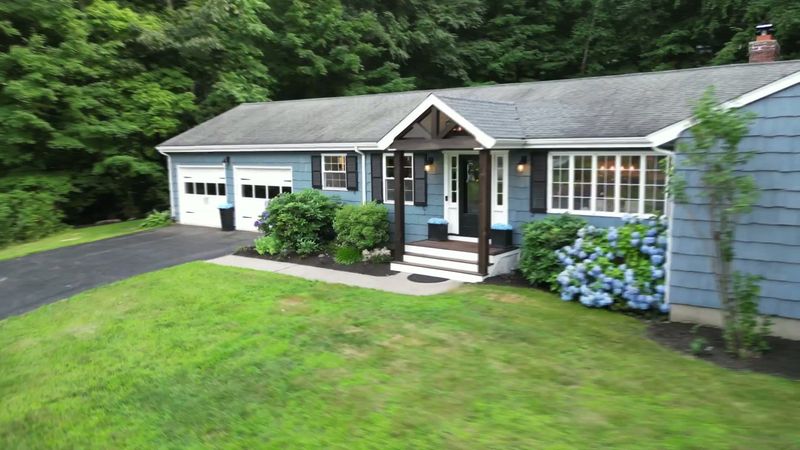
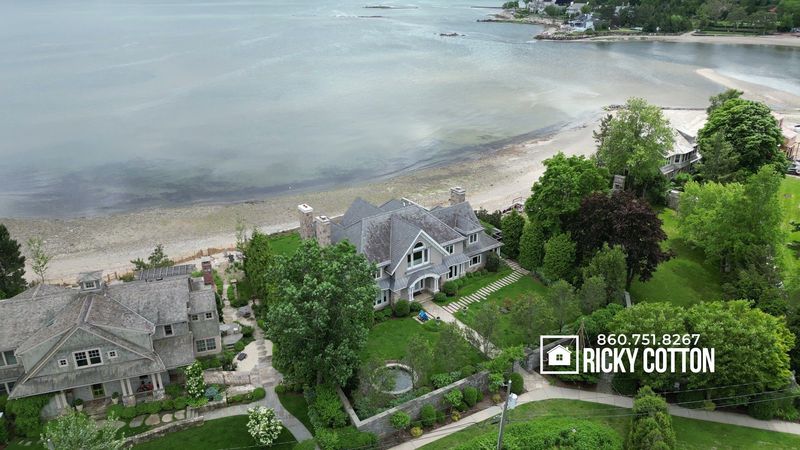
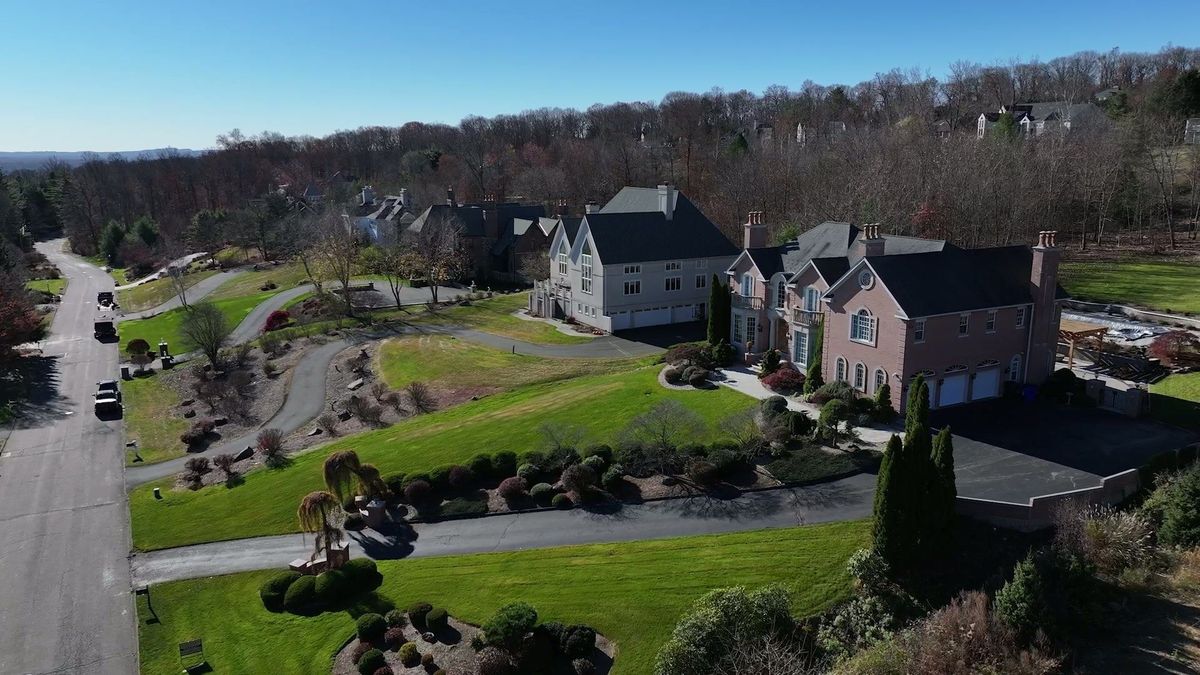
Around five minutes seventeen seconds, the film lifts above the town. An aerial view shows homes among trees, and elsewhere the aerial shots show a commercial street. This is the point in the film where conversation gives way to geography.
The contrast is the reason for including it. On the ground, the viewer has heard from people and seen storefronts and park paths. From above, the viewer sees how the residential streets and the commercial streets sit relative to each other, how much tree cover there is, and how the homes are spaced. For a viewer thinking about a place to live, that overview is information a sidewalk interview cannot give.
A colorful mural and a conversation in a car
Two other scenes show how varied the film’s settings are. In one, a colorful mural fills the background, a bright splash of color that is unmistakably a place and not a studio. In another, Robyn speaks while sitting in a car.
The car scene is a change of setting, and it works because it is a different kind of intimacy. The host is close to the camera, the frame is tight, and the viewer feels included in a quieter moment between stops. If you plan something similar, treat a car scene as a scene for a stationary vehicle, with nobody driving and filming at the same time. Safety comes before any shot.
Evening on a restaurant-lined street
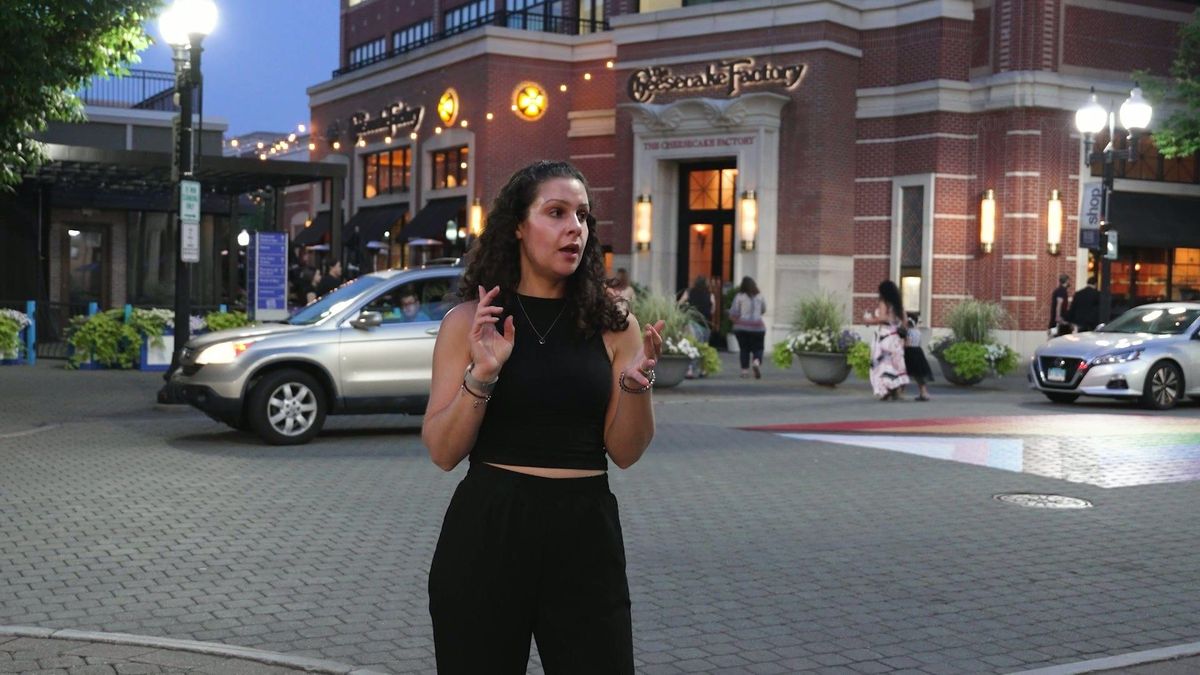
By about seven minutes fifty seconds, the film has moved into evening. Robyn presents beside a street lined with restaurants, and the light has changed from the daytime scenes. It is the clearest contrast in the film with its opening on a daytime shopping street.
A community film that only shows daytime shows half the town. The evening scene shows another side: a commercial street in the dusk, restaurant fronts, the changed light. For a viewer who wonders what the place is like after work, this is the answer in pictures.
The host returns to the camera here as she did in the opening. The film opens with Robyn speaking on a commercial street and returns to her on another in the evening, which gives it a frame. The viewer has been taken through a park, over rooftops and into conversations, and comes back to the same guide in a different light.
Why the length works
A film this long needs structure to avoid tiring the viewer, and three things provide it. First, the on-camera host returns at regular intervals, so the viewer always knows who is leading. Second, the settings change: street, park, arch, mural, car, rooftops and evening, so every few minutes the picture is new. Third, the film moves from daylight to evening, which gives it a direction even though it is built from conversations rather than a script.
It is also a film with two jobs. It introduces the people the agent might want a viewer to meet, and it introduces the town they might consider. The shopping street and the restaurant street cover commerce. The park and the homes cover daily life. The aerial shots tie the two together.
Planning a community conversation film
A film like this starts with a host who is comfortable talking with strangers and a list of places that look different from one another. Our real estate video page explains the types of film we make for agents, and a promotional video can carry the agent’s own story alongside a community film.
For short versions of the same footage, read our guide to short-form video for local business, and for ideas on structuring a longer piece, see real estate video tour tips.