Most property tours are filmed sideways. This one is filmed upright, in the 9:16 shape of a phone held in one hand. It runs two minutes and twenty seconds, opens with the address, and uses the tall frame to show houses, rooms and a presenter the way a phone screen shows everything else.
6 minute read
A film made for the phone
The first thing to notice about this film is its shape. It is 1080 pixels wide and 1920 pixels tall, a portrait frame with the same 9:16 proportions as a modern phone held upright. It is not a wide film that has been cropped. The picture was composed for the tall frame, so the subjects, the presenter and the rooms sit inside it on purpose.
That shape matters because of where a property film is often watched. A viewer who sees a link in a message, a social feed or a listing page is usually looking at a phone. A tall film fills that screen, and the viewer does not have to turn the phone sideways or see a small letterboxed picture. This page shows the film in its own portrait proportions for the same reason.
The rest of this page follows the tour from the title to the backyard, using five portrait frames from the film, and looks at how the tall format changes the way a house is shown.
The title and the house from the front
The film opens with a title: 186 W Mountain Rd, West Simsbury, CT. Putting the address in the first seconds tells a viewer exactly which property they are watching. The title also works as a label if the film is shared by itself, away from a listing page.
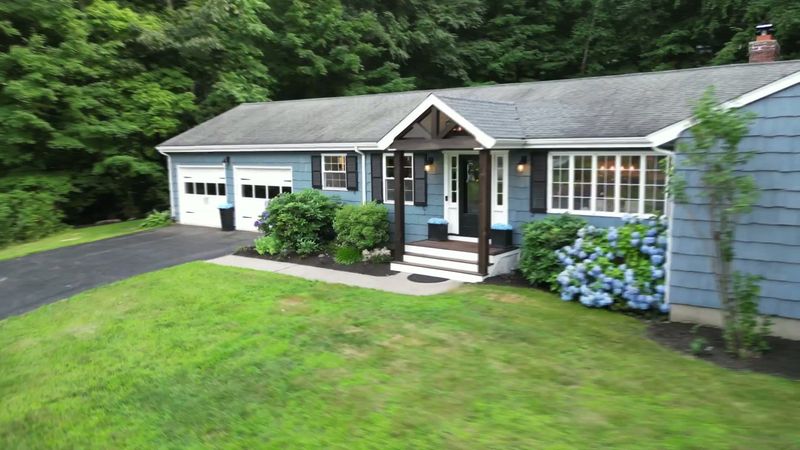
About fifteen seconds in, the frame used as this page’s poster shows the house exterior and planting beds at 186 West Mountain Road. In a portrait frame, the house can rise from the bottom to the top of the picture, with the planting beds in the foreground and the roofline above. The vertical shape lets a viewer see the front garden and the building together, which a wide frame would often show side by side.
A tall frame favors height and depth. The planting beds lead the eye upward toward the house, and the entrance feels like something to approach, not something to look across.
An aerial view in split-screen panels
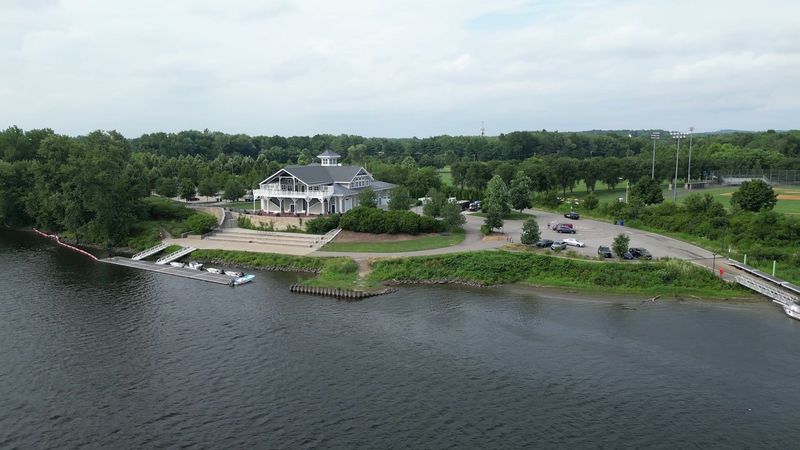
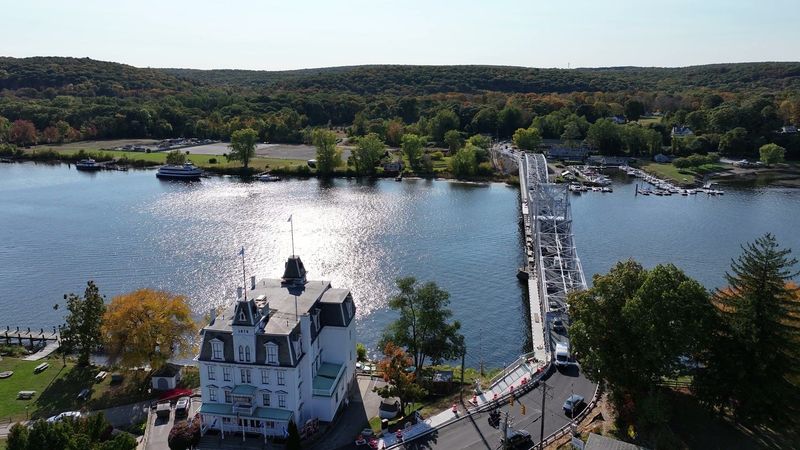
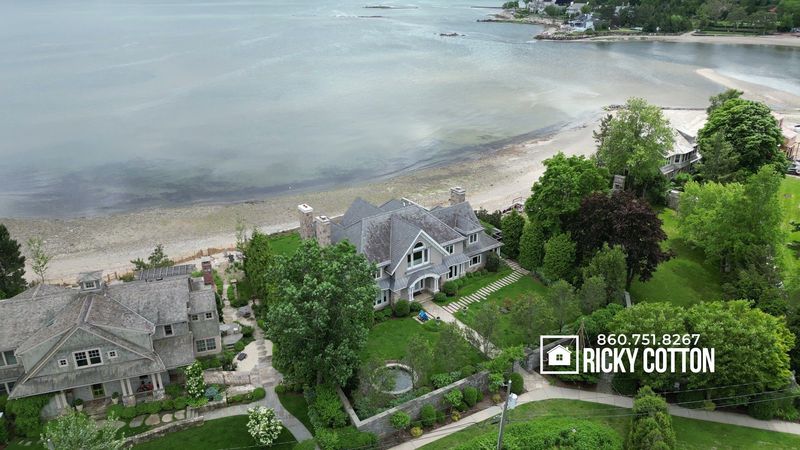
The aerial section is the most inventive use of the format. A wide aerial photograph does not fit a tall frame, so the film uses split-screen panels: several panels of aerial footage stacked or arranged within the portrait picture, with a blurred fill behind them. Instead of cropping the aerial view down to a narrow slice, the film shows more of it by dividing it.
This is a practical answer to a real problem. Aerial footage is almost always wide, because the landscape is wide. In a vertical film, the choice is between a tight crop that loses the context and a layout that preserves it. Panels preserve it. The viewer sees the house, the lot and the surroundings in one tall composition.
The blurred fill is also worth a note. Where a panel does not reach the edge of the frame, a soft, blurred version of the same footage fills the space, so the frame never shows empty bands. It keeps the picture full and keeps the viewer’s eye on the panel.
From the lawn to the kitchen
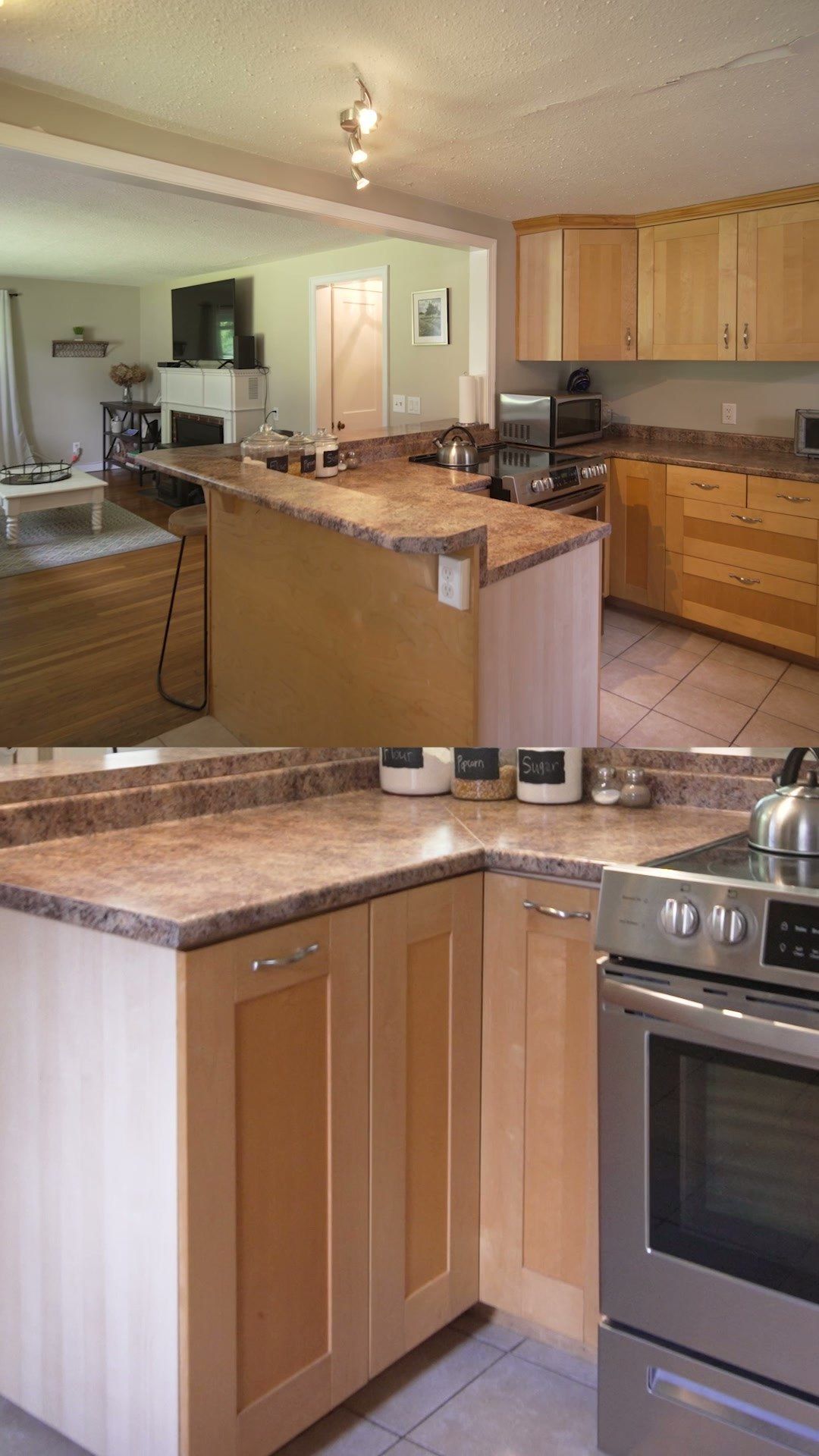
After the exterior, the film shows the lawn and then goes inside. At about thirty-two seconds, the frame shows kitchen cabinets and an island in the vertical property tour. The tall frame shows the island in the foreground with the cabinets rising behind it, so the viewer sees the work surface and the storage in the same shot.
A kitchen is a room that suits a vertical frame well, because so much of its character is in vertical lines: tall cabinets and the height of the ceiling. A portrait shot can include the floor, the island and the upper cabinets together, where a wide shot would often have to choose.
The agent in the doorway and the living space
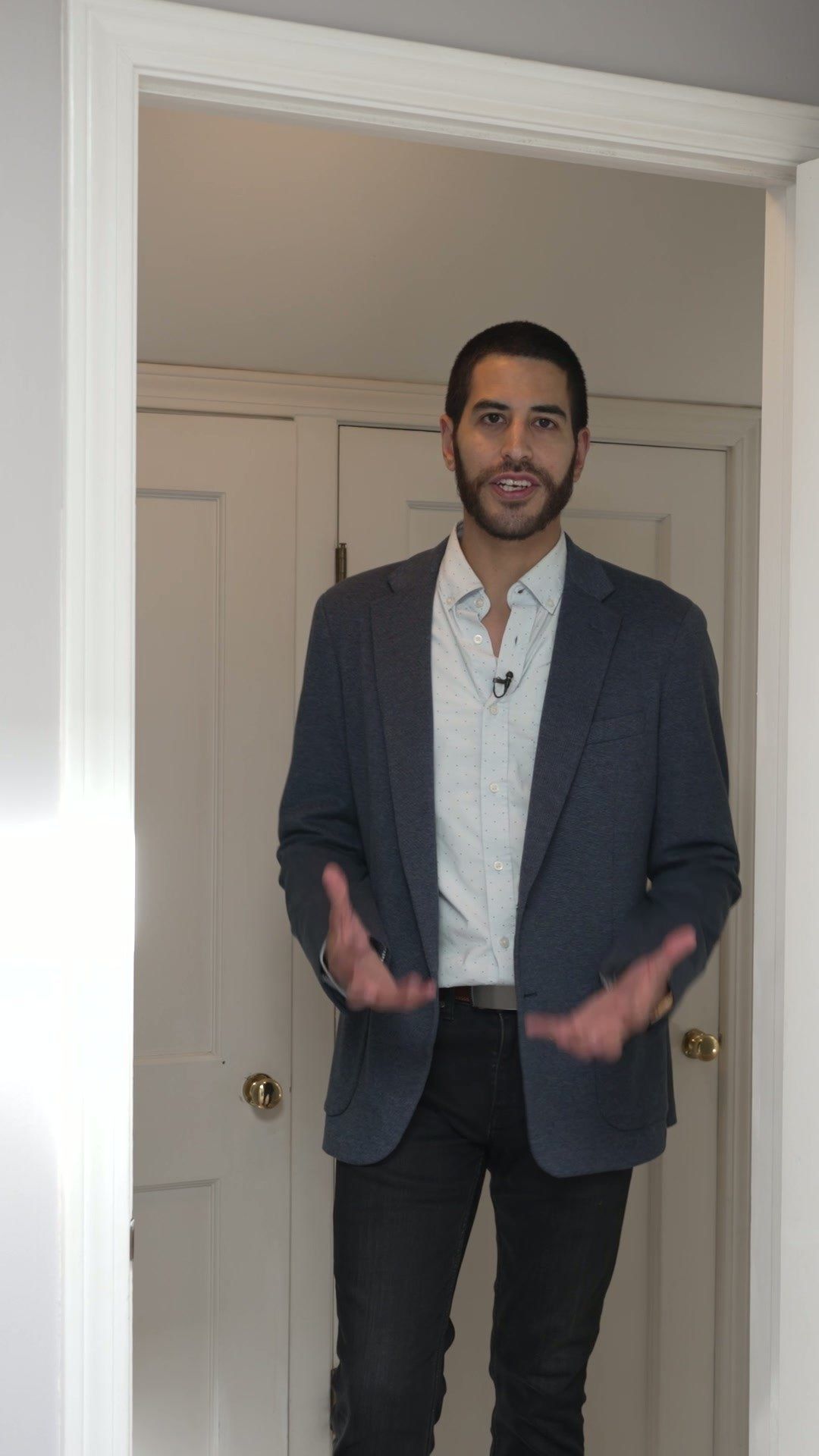
At about forty-four seconds, Lou Raven presents from an interior doorway. A doorway is a natural frame inside a frame. In a tall picture, the presenter stands in the doorway with the room behind him, and the viewer sees both the person and the space he is talking about.
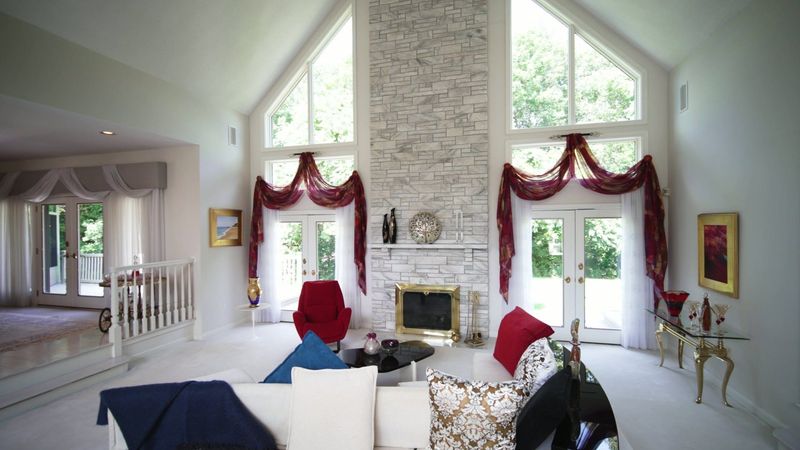
The agent appears in several places through the tour: in the rooms, in the living space and in the doorway. Because the format is vertical, the presenter fills more of the frame than he would in a wide shot, and the effect is closer to a video call or a short social video. That closeness suits a phone, where people are used to seeing a face fill the screen.
The balance between the person and the room is the main craft problem in a vertical tour. Too much presenter and the house disappears; too little and the film loses its voice. Here, the film alternates between rooms with the agent and rooms on their own, so each gets time.
A bedroom with a skylight
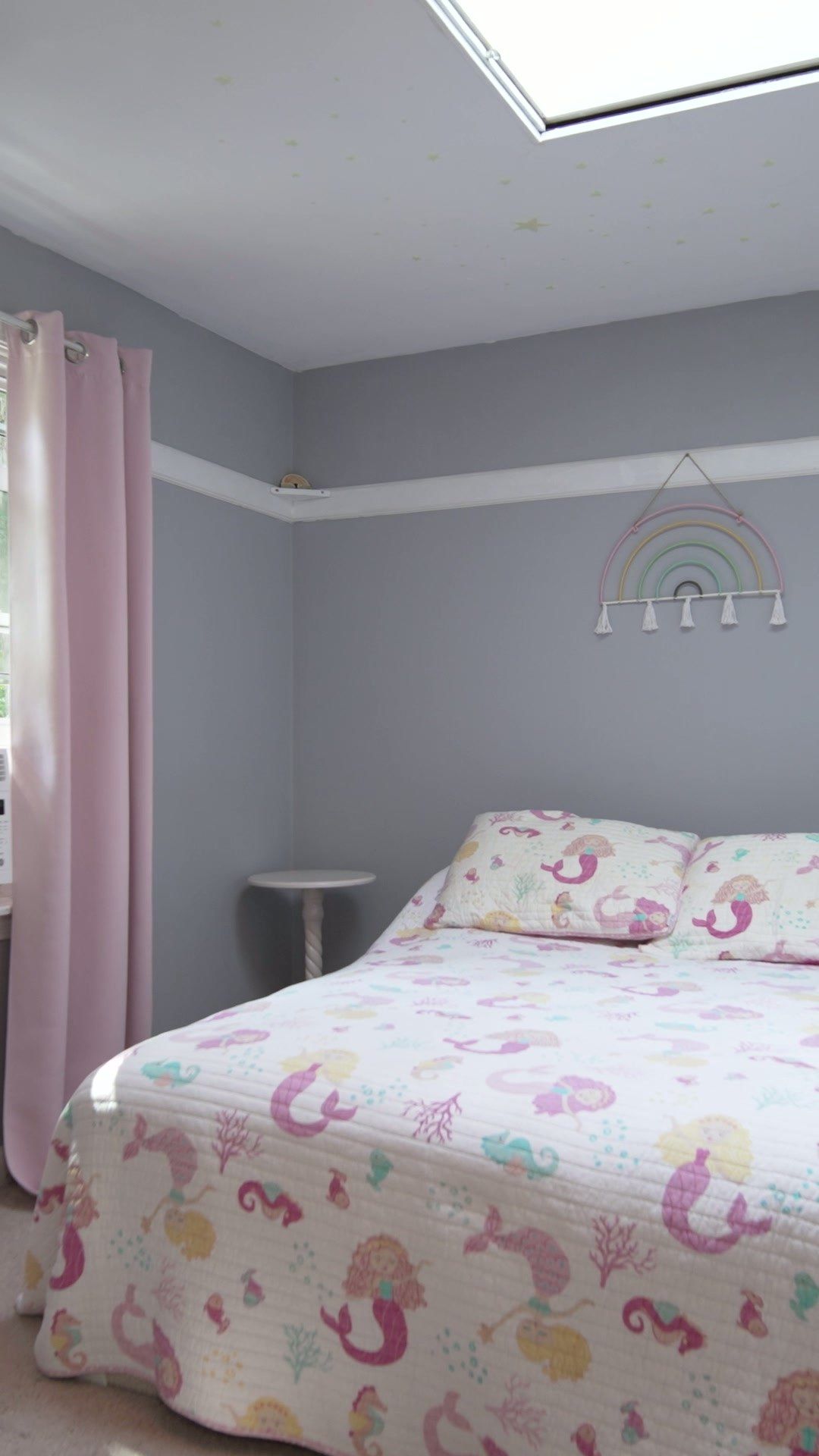
A little past one minute, the film shows a bedroom with a skylight. The skylight is a vertical feature in a literal sense: it is overhead, and a portrait frame can show the floor, the bed and the ceiling light in one picture.
This is a case where the format helps the content. A wide frame would have to tilt up to show the skylight and lose the room. A tall frame can hold both. The result is a bedroom that feels bright and open to the sky, an impression the viewer takes from the picture rather than from description.
The film also walks through rooms in motion. The walkthrough moves vertically as well: the camera travels forward through a room, and the tall frame keeps the doorway ahead and the floor below in view, so the viewer feels the direction of travel.
A presenter at the table and the backyard close
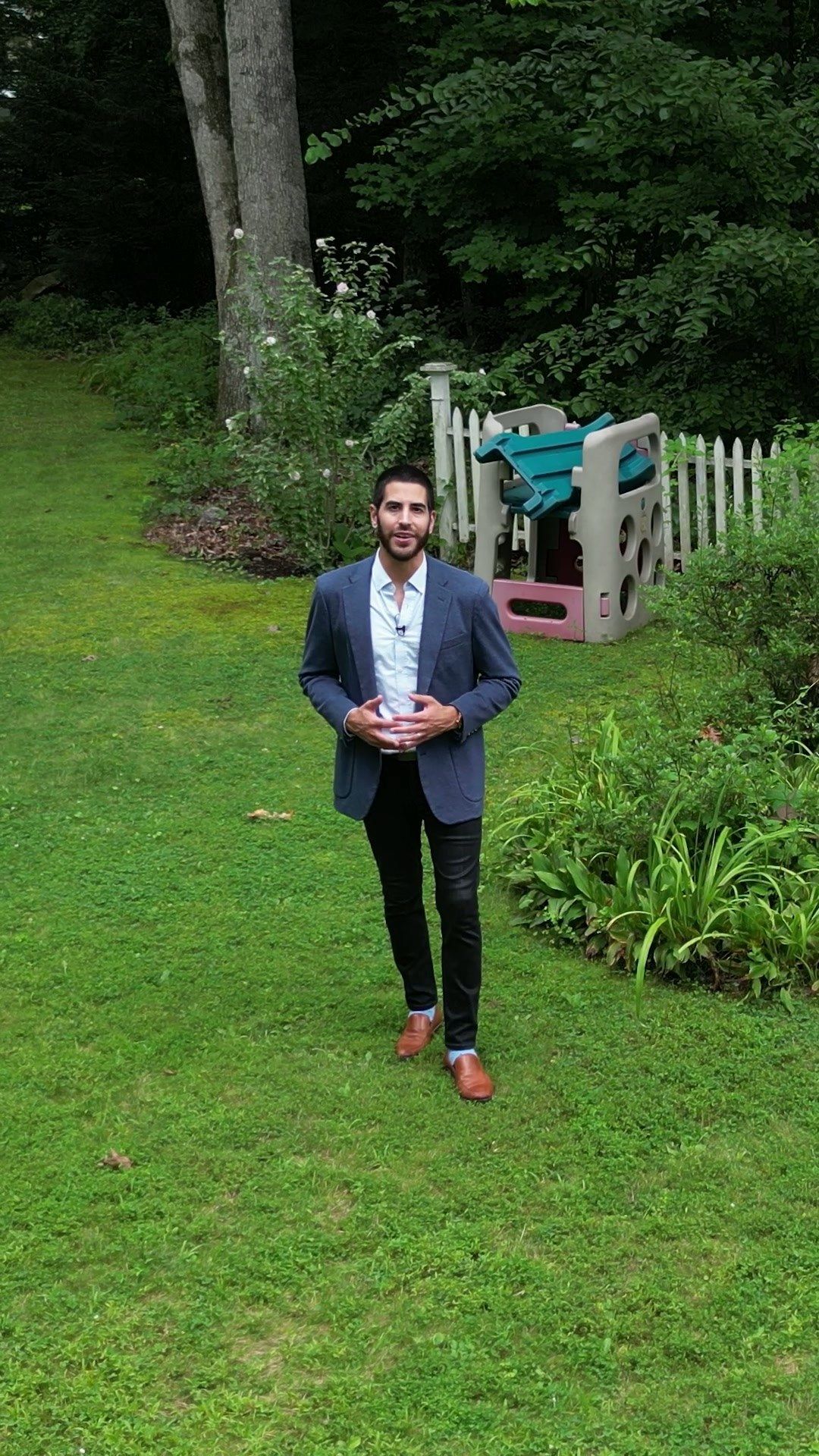
The presenter also appears by a table, and the film finishes outside. At about two minutes and five seconds, Lou Raven presents from the lawn behind the house. The backyard is the closing location, and the film ends there with contact details.
Ending in the backyard mirrors the opening on the front planting beds. The film starts at the front of the house and finishes at the back, so the viewer has seen the property from one end to the other. The agent’s final position on the lawn, in a tall frame, shows the house rising behind him.
The end card gives Lou Raven’s name and contact information, the next step for a viewer who wants to know more.
What the vertical format changes
Filming upright is not simply turning the camera. It changes decisions at every level, and this film shows four of them.
- Framing: rooms are composed for height, so floors, cabinets and ceilings share the picture.
- Aerials: wide footage is arranged in panels with a blurred fill instead of cropped.
- Presenters: the agent fills more of the frame, which feels closer on a phone.
- Movement: walkthroughs move forward through the tall frame, with doorways and floors in view.
The vertical format is also well suited to sharing. A 9:16 film plays full-screen on a phone, can be sent in a message and fits the shape of social video. The same shape is the weak point on a desktop, which is why this page keeps the video at its natural portrait size and centered instead of stretching it.
Planning a vertical property tour
A vertical tour is planned differently from a horizontal one. Think about the rooms that look best tall, the places where a doorway can frame the presenter and how wide footage will be handled. Our real estate video page outlines how we approach tours, and short-form video for local business explains why vertical formats suit phones.
For other property films in this category, see the real estate tour tips, and if you want the same footage to introduce you as an agent, a promotional video can carry your own story.