Weddings
First-dance photography: atmosphere, movement and emotion
Why a first dance needs both wide and close frames, and how a dip, an elevated view or a full-length outdoor dance can each tell part of it.
By Tyler Rivera 8 min read
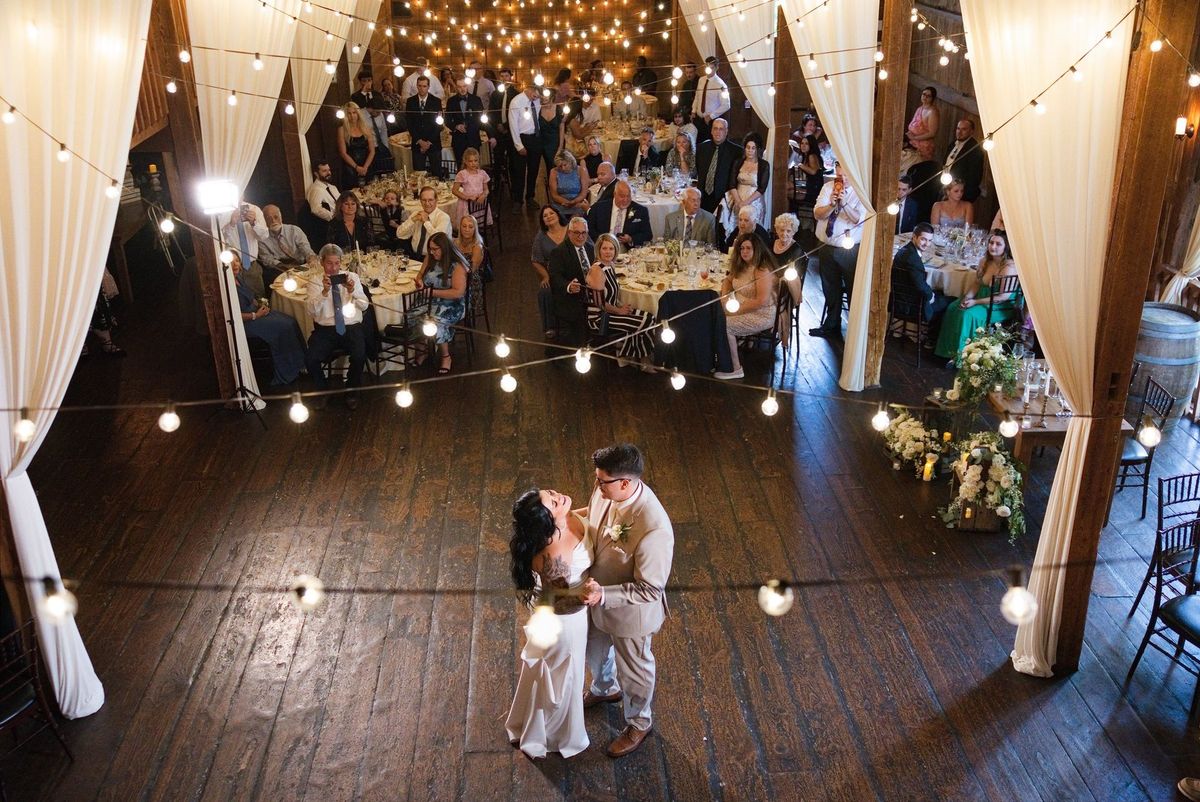
A first dance is one of the few moments in a wedding when everyone is looking at the same two people, and it asks a lot of a photograph. The pictures have to show the room, the movement and the feeling, usually all at once, and the dance itself may only last a song. That makes a small amount of planning unusually valuable. This guide looks at the choices you can make about the song, the floor and the light, and at how wide and close frames work together. Examples come from four weddings: Mariana and Max's at Maneeley's, Sadie and Mat's at The Barns at Wesleyan Hills, Ashley and Anthony's farm wedding and Jacob and Thea's at Warehouse 635.
Why does a first dance need a wide frame?
Movement needs space to read. A dancing couple in a tight crop can look like two people standing close, while a wider frame shows the turn, the floor and the people watching.
A wide frame is also the picture that remembers the room. Years later, it is the one that shows where the tables were, how the lights looked and who stood around the edge. That kind of context is easy to take for granted on the day and valuable afterwards. The elevated view at the top of this guide, from Sadie and Mat's first dance, shows how a wide frame from above takes in the circle of guests around the couple.
If you would like a wide frame to be a feature of your set, think about the layout of the room. A clear floor, tables set back and a bit of space around the couple all help. A cluttered floor or a floor where guests stand very close limits what the frame can show.
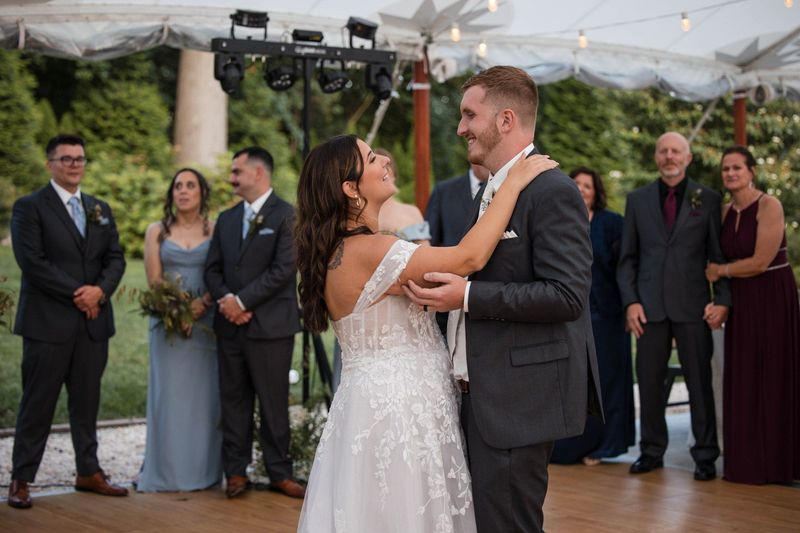
The frame above shows Sophia and Tommy dancing closely together while their wedding party watches, with the people around them in view. The wider view lets the movement and the audience share the picture.
What do close frames add?
Close frames are where the feeling lives. They narrow the picture to a pair of people and let expression, posture and touch do the work.
An intimate frame like the one in the Mariana and Max story is made from close to the couple, so expression and closeness fill the picture and the room falls away. In the Ashley and Anthony story, Ashley smiles up at Anthony in a close view of their dance. It is the kind of picture a couple tends to return to, because it is about them and not about the event.
Close frames depend on trust. People relax when they know what to expect, so it helps to talk in advance about how close the camera will be and whether you would like to be given space at any point. Many couples are surprised how quickly they forget the camera once the music starts.
How do you capture movement in a still picture?
Movement is the hardest thing to show in a photograph, and the best frames usually catch a moment where the movement peaks or pauses. A dip, a turn, a lift or a step apart and back together all have a clear shape.
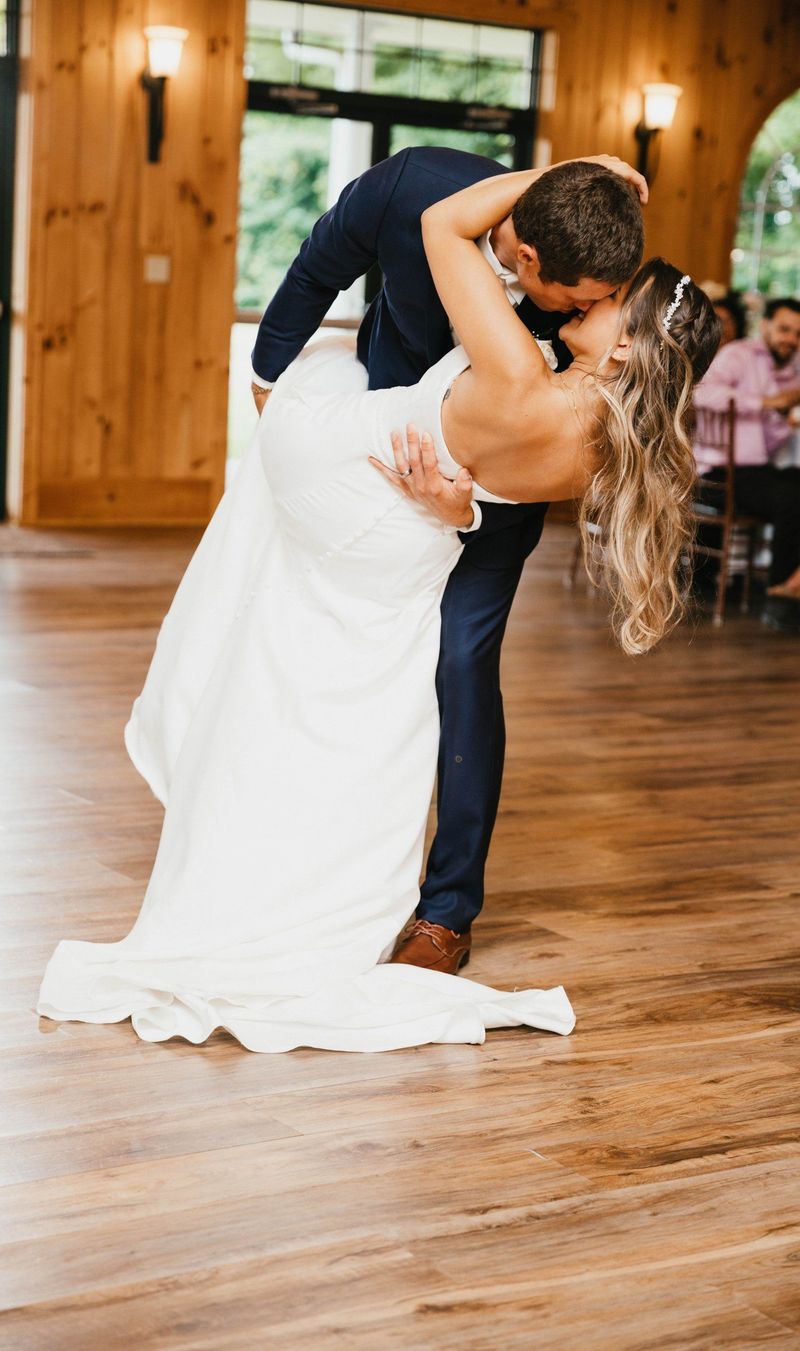
The dip above, from Mariana and Max’s dance, shows how a single gesture can carry a whole dance. It also shows the value of variety. A set made only of slow, close frames can feel static, and a set made only of wide frames can feel distant.
If there is a moment you hope to have photographed, such as a dip or a final embrace, say so beforehand. You do not need to rehearse, and you certainly do not need to choreograph; a short note is enough. Equally, if you would rather not plan anything and let the dance happen, that works too.
What should you decide about the song and the floor?
Several small decisions affect the pictures. The first is the length of the dance. A short edit of a song gives a concentrated moment, and a full-length song gives more room for variety. Neither is better; they just lead to different sets.
The second is whether others will join. Many couples invite guests onto the floor partway through, and the picture changes from a private moment to a shared one. Knowing when that will happen helps the frames be ready for both.
The third is the floor itself. Slippery, uneven or very dark floors limit what is possible. If the venue has options, ask which area is best lit and has the most room. A well-lit, uncrowded stretch of floor is worth more than a larger area that is hard to see.
How do room and light shape the pictures?
Reception rooms are usually dimmer than the places where the rest of the day happened, and that changes what a dance picture can look like. Warm string lights, candles and spotlights each create a different mood, and each has limits. A very dark room can make fast movement hard to freeze, while a room with evenly spread light gives more freedom.
If you are choosing between layouts, ask the venue where the lighting is strongest and whether any lights can be raised during the dance. Sometimes a small adjustment, such as turning up a lamp near the floor or moving the dance area a few steps closer to a lit wall, improves every frame.
Backgrounds matter as well. A plain wall, curtain or dark space behind the couple keeps attention on them, while a busy buffet or a row of coats behind them pulls the eye away. It is worth looking at what stands behind the floor before the dance begins and moving anything distracting.
What is worth telling the DJ or band?
The person running the music sets the pace of the evening, and a short conversation with them helps the pictures as much as it helps the room. Let them know when the dance is expected, whether anyone will be invited onto the floor and how the song will end. A clear ending, such as a final chord or a fade, gives the dance a clean last frame.
It also helps to agree where the couple will begin and where the dance will travel. Many couples start in the middle of the floor and move around slowly, which is easy to follow. A route that goes into a corner or behind a table is harder.
If your plans include announcements or lighting cues, share them in advance. A sudden change in lighting or a surprise element is part of the fun, but it helps if Legend knows when to expect it, so the moment is not missed.
How can you keep the dance relaxed?
Many people feel more nervous about a first dance than about anything else in the day. The simplest remedy is to make the dance feel like yours, not a performance. Choose a song you love, a style you are comfortable with and a length that suits you.
If you would like to practise, a few runs in your living room are enough to settle the first steps. Rehearsing every move can make the dance feel stiff, and a looser approach often makes warmer pictures. Talking to each other during the dance, even in a murmur, is a reliable way to look natural and gives the frames real expressions.
Remember the guests are on your side. They are watching because they care about you, and their reactions, whether laughing, clapping or simply smiling, become part of the story. A few wide frames that include them often become some of the most treasured pictures from the evening.
What does a full-length frame add, and what about black and white?
A full-length frame shows the whole of a dance, from posture to footing, and it is a useful companion to wide and close frames. Some frames suit black and white because the colour of the setting competes with the feeling of the moment. Removing it simplifies the picture and puts attention on shape, light and expression. Other frames lean on colour instead.
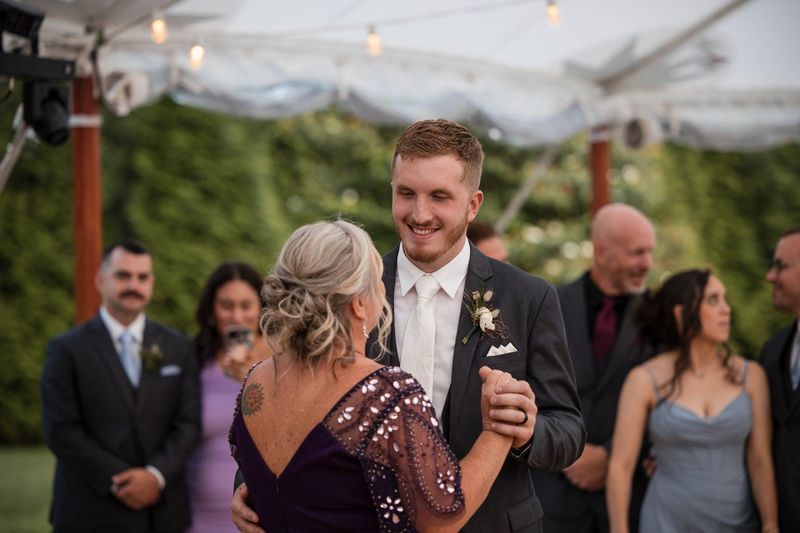
In the frame above, Tommy smiles while dancing with a guest beneath the reception tent, and the picture keeps the attention on his expression. A black and white version of a frame like this would put attention on shape and expression, with tones carrying the mood, so the picture feels less tied to a particular season or trend. Either way, it works best as one frame among several, not as a replacement for the rest of the set.
If you like the idea of black and white, you can mention it in advance. It is a matter of taste and of the particular frame, and a mixed set, with most frames in colour and a few in black and white, is a common and sensible choice.
How does the dance sit among the other reception moments?
A first dance rarely stands alone. It sits among the entrance, the speeches, the cake and the dance floor, and the best sets treat them as parts of one story. If you are planning the reception, think about the order and the mood: whether you want the dance early, when everyone is fresh, or later, when the room has settled.
Whatever you choose, tell Legend the order of events so the frames can follow it. The guide to speech photography covers the toasts, and the guide to cake-cutting photographs covers another reception moment that pairs well with the dance.
Think too about energy. A reception has a shape, with quiet moments and lively ones, and the dance is often a high point. Allowing a pause before and after it gives you time to catch your breath and gives the pictures space to breathe. Many couples find that a short moment of calm just before the song begins also helps them arrive at the floor relaxed and ready to enjoy it.
How does this connect to the finished story?
In the Mariana and Max story, the first dance appears in the reception chapter, shown once wide and once close. In the Sadie and Mat story, it appears twice as well, once in a tall frame beneath string lights and once in the elevated view at the top of this guide, followed by two frames of family dances on the barn’s wooden floor. The Ashley and Anthony story takes the dancing outdoors, from the couple beside the reception tent to guests dancing together on the lawn.
For a fuller picture of how a whole wedding day can be paced, the wedding photo and video timeline walks through the day. To learn about the services, see wedding photography and wedding photography and videography.