Weddings
Wedding cake-cutting photographs: details and the moment
The cake as an object, then the moment it is cut: how the display, the decoration and the first slice each make a different picture.
By Tyler Rivera 8 min read
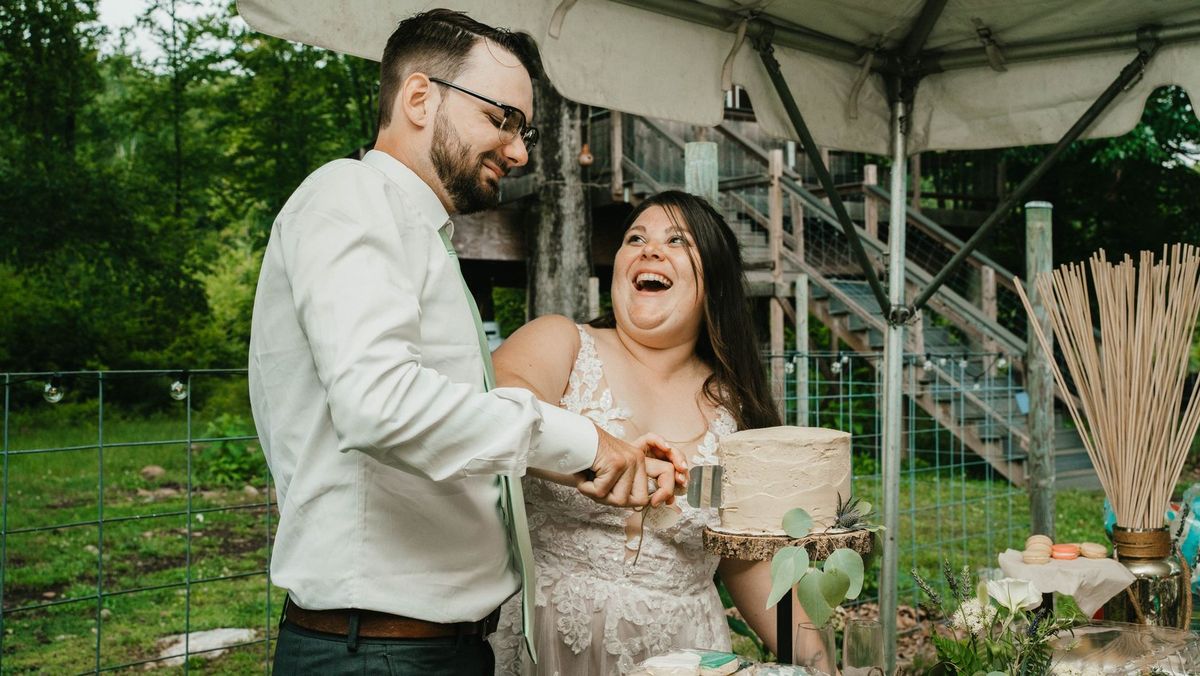
Cake cutting is a short moment with a lot of tradition attached, and it tends to produce cheerful, easily shared pictures. It also depends on a few practical things that are easy to overlook: a cake that has been set up well, a table that can be photographed, and a plan for who is doing what. This guide covers those details, the sequence of frames a cake moment can produce, and a few choices you can make beforehand. Examples come from four weddings: Mariana and Max's at Maneeley's, Sadie and Mat's at The Barns at Wesleyan Hills, Ashley and Anthony's farm wedding and Jacob and Thea's at Warehouse 635.
Why photograph the cake before it is cut?
A cake is a piece of work, often chosen and decorated with care, and it is at its best before anyone touches it. A picture of the whole display records the cake, the table and the surrounding decoration while they are still untouched.
The frame below, from Sophia and Tommy’s wedding, shows flowers decorating a small white cake before it is cut. A frame like that is a reference for everything that follows. It also helps the finished story, because it sets the scene before the action begins.
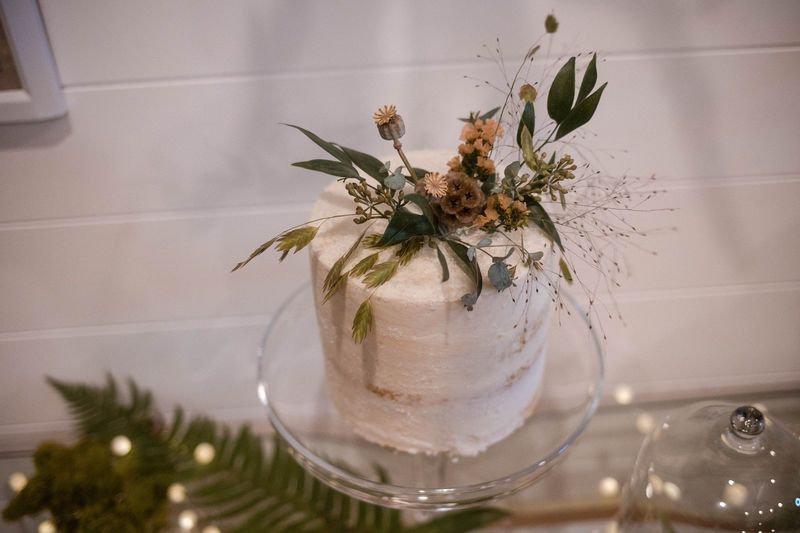
If you want this picture, mention it in advance. The cake needs to be set out and the table dressed before guests crowd the room, and it helps to have a short window when the area is clear. A quiet moment before the reception opens, or during a break, is usually when this is easiest. Ask your baker or venue when the cake will arrive, so the plan can match.
What can you do to make the cake table work?
The table is part of the picture, and a few details improve it. Keep the surface tidy. Plates, forks and napkins can wait until after the photographs. A simple cloth, some flowers or a few candles add to the setting without competing with the cake.
Think about the background. A plain wall or soft drapes behind the table keep attention on the cake, while a stack of chairs or a busy bar pulls it away. If the table can be moved a short distance to a better spot, it is worth considering.
Consider height as well. A cake on a tall stand is easy to see and to frame, and a cake on a low table is harder to photograph without people crouching. A good stand also keeps the knife and hands at a comfortable level for the couple, which makes the cutting itself more graceful.
How does the cutting itself look?
The first cut is a simple gesture, but it has a clear shape: the approach, the knife and the slice. The cover of this guide, from Ashley and Anthony's farm wedding, shows the reaction as well: the two of them laugh together as they cut.
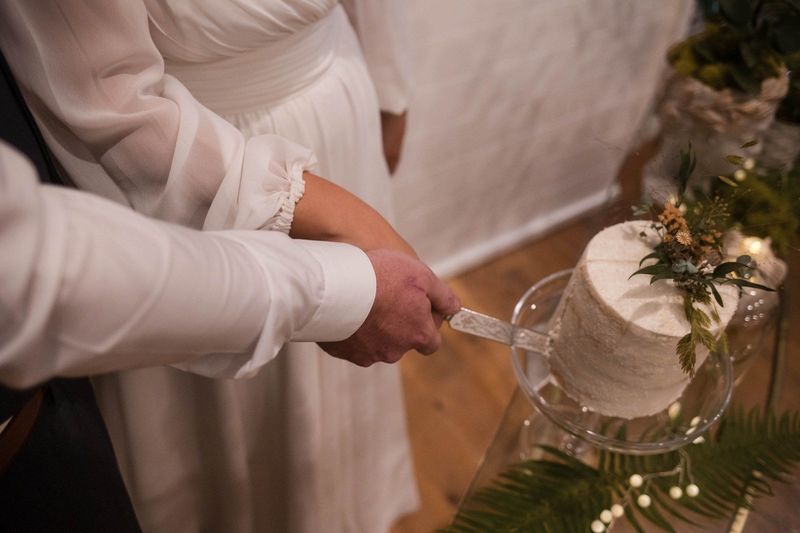
In the frame above, Sophia’s hands guide the knife into the decorated cake. A close frame like this works because it keeps the attention on the hands and the cake, and it leaves faces out so that the gesture carries the picture. A separate wider frame of the same moment would add the faces and the room, which is why it helps to ask for both.
Hands are the key subject here. A couple's hands on the knife, the cake and each other tell the story of the moment. A close view of them is a good companion to a wider frame that shows faces and onlookers.
It helps to decide whether you would like to pose for a few frames or simply cut the cake as you would naturally. Either works. A pause for the camera is a common choice, and a spontaneous cut is also fine. Telling Legend which you prefer lets the frames follow your approach.
What about feeding each other?
Feeding each other cake is a playful tradition, and it produces some of the most expressive pictures of the evening. The gesture invites a smile, a laugh or a look, and the cake itself adds colour and movement.
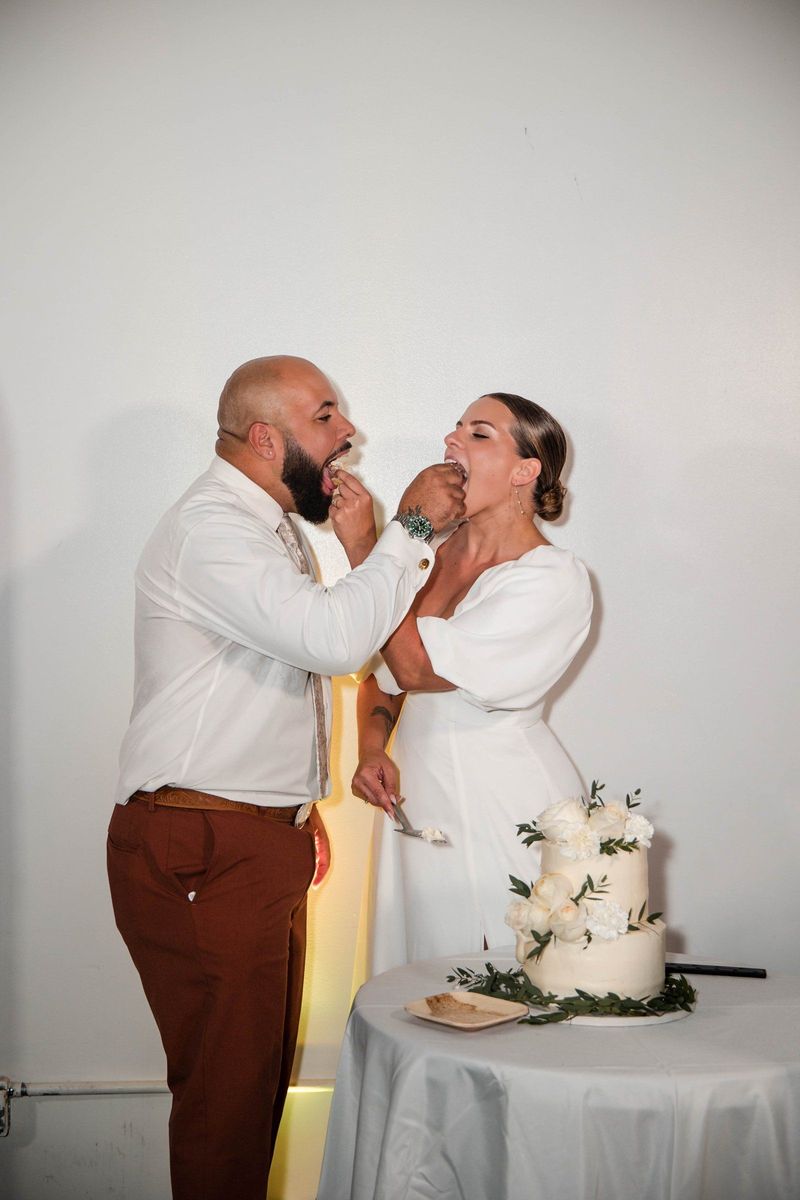
In the frame above, Jacob and Thea share cake together beside a cake decorated with flowers. It is a frame about the two of them, and the moment is easy to read at a glance.
The gesture is also a choice. Some couples love the tradition, some prefer a gentler version and some skip it altogether. If you want to keep it light, you can agree beforehand how you would like it to go. A small piece, a napkin close by and a shared sense of humour tend to keep everyone comfortable. Whatever you decide, the pictures will reflect your mood, so it is worth choosing the version that feels like you.
What choices can you make about the cake itself?
Photographs are easier to plan when the cake has a clear look. A few choices help. Think about colour: a cake in tones that echo your flowers or table linens makes the whole scene feel connected, while one with strong contrasting colours stands out as its own subject. Think about texture too. Fresh flowers, piped detail, fruit or a simple smooth finish all read differently on camera, and close detail frames of a decorated cake can be as appealing as wide ones.
Size and shape matter in a practical way. A tall cake needs space above it in the frame, and a wide, low cake invites a view from above. A small cake on a simple stand is easy to photograph from several angles, while a large display may need more room around it.
Lastly, think about whether the cake is for show, for eating or both. Some couples display a decorative cake and serve a sheet cake from the kitchen, which keeps the cutting moment tidy. Others serve the display cake itself. The choice does not change the pictures much, but it can change the plan for who cuts, who serves and when.
How can you keep the moment natural?
A cake moment is brief, and it works best when it feels like a celebration, not a task. The simplest approach is to decide beforehand how you want it to go, then relax and enjoy it.
Agree who holds the knife, who steadies the plate and whether you will pose first. Choose a spot where both of you can stand comfortably, with enough room for guests to gather without crowding. Think about your clothing, too: a long sleeve, a veil or a jacket can get in the way, and a helper can step in to adjust things between frames.
Humour helps. Cake is a lighthearted tradition, and a laugh in the middle of it usually produces a better picture than a held smile. If you are the kind of couple who enjoys a bit of mischief, there is no need to hide it. If you would rather keep the moment gentle, say so; the pictures will match.
How do guests figure in the pictures?
Guests are part of the cake moment, even though the couple is the focus. Applause, phones raised, children pressed forward for a better look: these are details that make a frame feel like a real event.
A little organisation helps. A short announcement invites guests to gather, and a gentle request to leave a clear line of sight keeps the area workable. Some couples ask a few close friends or relatives to stand near the front, which gives the frame familiar faces and a natural crowd.
At the same time, avoid a crush. A tight scrum around a cake table hides the cake and makes the couple uncomfortable. Leaving a ring of space around the table, even a small one, lets the moment breathe and gives the pictures depth.
Why does the moment after the cut matter?
The moments after the cake is cut are often the most relaxed. The tradition has been completed, and the couple can laugh, kiss or look out at their guests. Those reactions give the sequence a conclusion that the knife and the bite cannot give on their own.
In the Ashley and Anthony story, the couple laugh together as they cut, and Anthony offers Ashley a bite before she feeds him one. The Mariana and Max story includes a kiss after the cake was cut. Together, a cut, a bite and an affectionate moment afterwards show a beginning, a middle and an end.
Allow a moment for this to happen. When a cake moment is rushed, the quieter frames can be missed because everyone is already moving to the next part of the evening. A short pause, perhaps prompted by the host or the music, gives the couple room to enjoy it and gives Legend time to catch it.
What should you tell the baker, the venue and the host?
The cake moment involves several people, and a few clear messages help. Tell the baker when the cake will be needed and where it will be set up. Tell the venue what you would like to happen with the table and whether the cake can be moved. Tell whoever is hosting the evening roughly when the cutting should happen and how it should be announced.
A short announcement helps guests gather and gives the couple a cue. It also helps the pictures, because guests standing around the table can be part of the frame instead of wandering in unexpectedly.
If the cake is being shared with guests later, ask who will cut and serve it, so the couple does not need to worry about it. A relaxed, organised cake moment is easier to enjoy and easier to photograph.
How does the moment fit among the reception pictures?
Cake cutting sits alongside the dance, the speeches and the other reception moments, and it often provides a lighter beat in the evening. A dance is about movement and a speech is about voices, while a cake is about colour and shared delight. Thinking about the evening as a sequence of different moods helps you decide where each should go.
The guide to first-dance photography and the guide to speech photography cover the neighbouring moments. For help planning the whole day, the wedding photo and video timeline walks through where each might fall.
How does it connect to the finished story?
In the Mariana and Max story, the cake and the first cut have their own chapter, and the cake display shown above is a related frame from the same reception. The Sadie and Mat story pairs a frame of the cake against the barn's wooden interior with the cutting and the feeding. The Ashley and Anthony story returns to the dessert stands from the first chapter and ends with the cake itself. To learn about the services, see wedding photography and wedding photography and videography.