Weddings
Wedding couple and bridal portraits: making room for connection
Plan first looks, couple portraits and bridal photographs, with real examples from Maneeley’s, The Barns at Wesleyan Hills and a farm wedding.
By Tyler Rivera 9 min read
Couple and bridal portraits are the part of a wedding many people worry about most, and often enjoy most once they begin. They are also the part where small decisions made beforehand, about time, place and mood, change the pictures more than any amount of direction on the day. This guide is a practical look at the first look, couple portraits and bridal portraits: what choices you can make, what a frame can show, and how the three kinds of picture fit together. Examples come from four weddings: Mariana and Max's at Maneeley's, Sadie and Mat's at The Barns at Wesleyan Hills, Ashley and Anthony's farm wedding and Jacob and Thea's at Spicebush Pond.
Should you have a first look?
A first look is a private meeting before the ceremony, usually with a small audience or none. It is a personal choice, and neither option is better. What matters is knowing what each one gives you.
A first look gives the two of you a moment together before the day speeds up, and it often lets portraits happen before the ceremony. Waiting until the ceremony keeps the first sight of each other in front of your guests, which is a different kind of emotion. Many couples choose according to temperament: those who would like a calm moment tend to prefer a first look, and those who want the aisle to be the first sight tend to wait.
If you choose a first look, pick a spot with some privacy and a clear approach, so there is a path to walk and a place to stand.
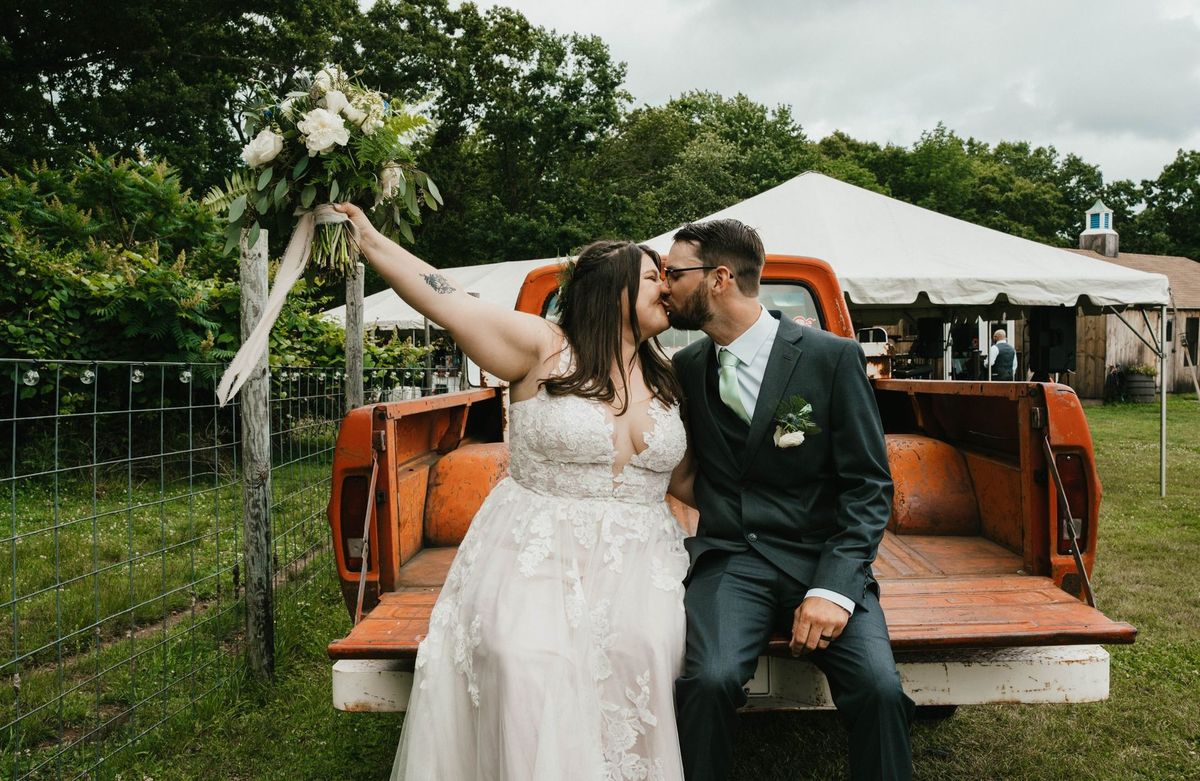
Portrait settings do not have to be conventional. The cover of this guide, from Ashley and Anthony's farm wedding, shows a kiss on the tailgate of an orange truck as Ashley raises her bouquet. It works because the unusual setting belongs to the day, and because the colour of the truck stands out against the green around it.
What makes a first look easy to follow in pictures?
A first look holds several pictures in one. There is the approach, the reaction and the closeness afterwards. If you think of the sequence as three beats, it is easy to see what a set needs: one wide frame of the setting and the anticipation, one frame of the reaction, and one quiet frame of the two people together.
Distance matters. A first look photographed only from close up loses the sense of approach, and one photographed only from far away loses the faces. A good set uses both.
As a general rule, it helps not to over-direct the reaction. The most convincing pictures come when the people involved simply respond to each other, and the pictures are made around them. If you want to prepare, think about where you would like to stand and which way you would like to face, then let the rest happen.
What do couple portraits need most?
Couple portraits need time, space and a little unstructured closeness. Poses can help when the two of you want direction, but some of the best frames come in the gaps between poses, when you are simply standing together.
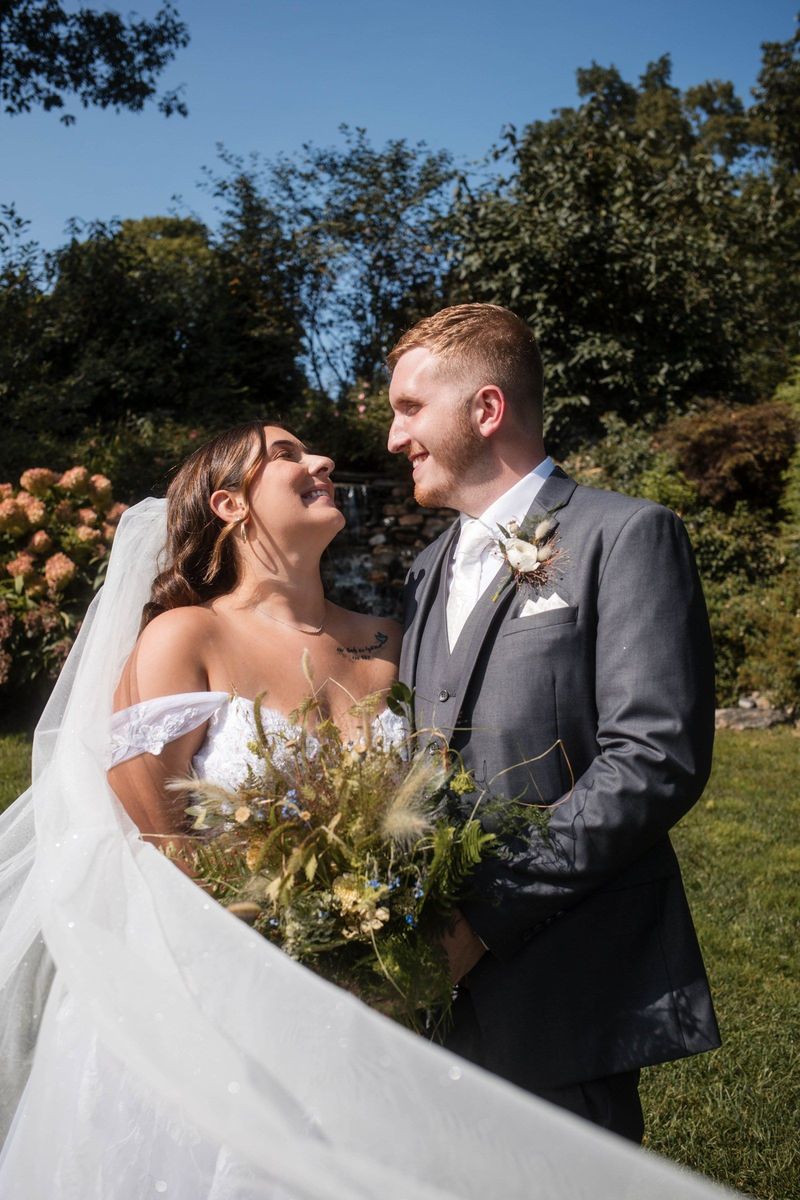
Sophia and Tommy looking at one another while holding her bouquet, as above, is a simple moment, and the garden gives it a setting without competing with the two people. In the Sophia and Tommy story, the garden sequence moves between a kiss beside a rock waterfall, a forehead kiss beneath the arbor and a veil floating to the side. In the Amanda and Charles story, the shoreline sequence moves between laughing frames, a black-and-white portrait and a kiss on a large rock.
Think about three kinds of frame. A wide frame lets the setting become part of the story. A medium frame shows two people and their body language. A close frame concentrates on feeling. A set that has only one of these will feel incomplete, so it helps to ask for all three.
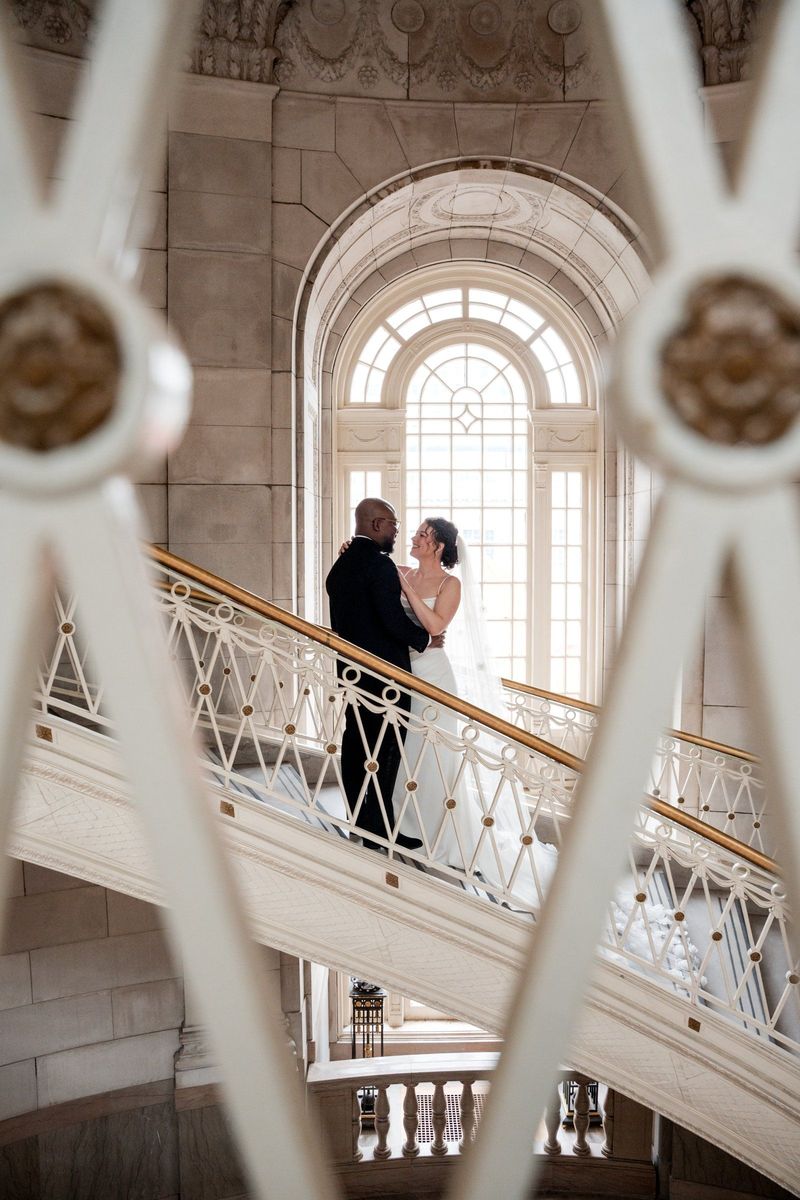
In the portrait above, Christina and Tajay are framed by an arched window and an ornate stair railing, so the architecture does the work of a frame around the two of them. In the window and staircase chapter, the same staircase appears in a held hand, a seated pose, overhead views and an embrace seen through the brass rail, a useful reminder that one setting can serve both close and wide pictures. If your venue has a staircase or a tall window, ask whether it can be used for both.
Also think about movement. Walking, turning and laughing all give a portrait energy that a still pose rarely does.
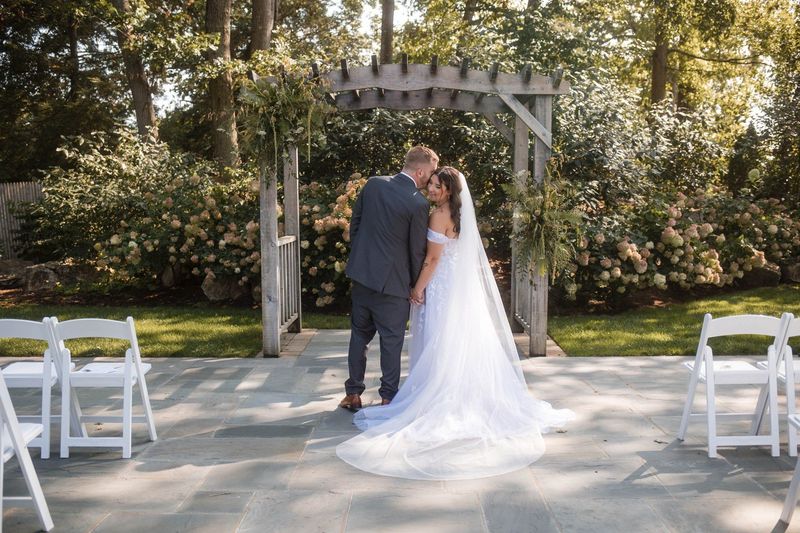
A wide embrace beneath an arbor, as above, shows how a setting can frame a couple without hiding them. The arbor and planting stay in the picture, and the two people remain the clear subject. If you like to dance or move during portraits, say so in advance, because it tells the pictures which direction to lean.
How do bridal portraits differ?
A bridal portrait is usually quieter than a couple portrait. It is a chance for one person to be photographed on their own, and the best ones depend on a few simple ingredients: good light, a setting that feels considered and something to hold, such as a bouquet.
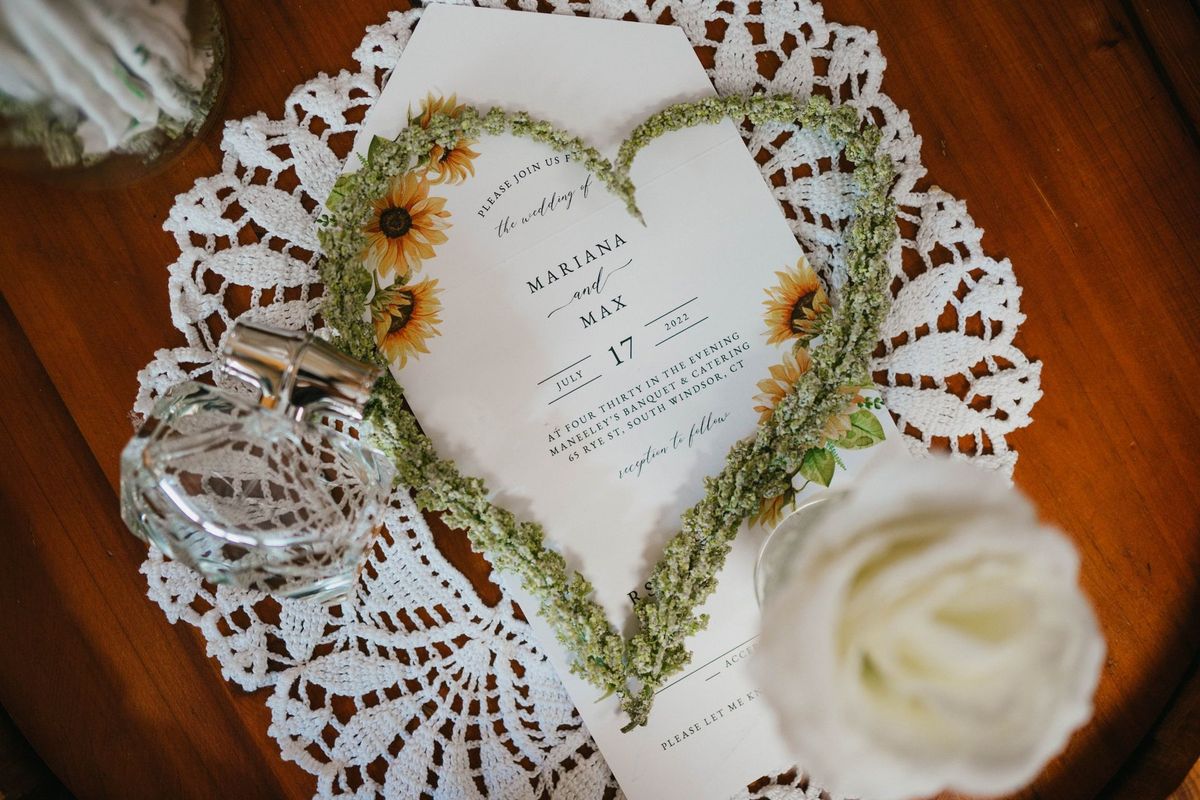
A profile with a bouquet is a more private picture than a smiling portrait. It works well alongside a close detail of the flowers, because together they show the person and the colour of the day. The Mariana and Max story has both, the Sadie and Mat story adds a bridal portrait with willow branches and warm light across the pond, the Ashley and Anthony story includes Ashley smiling with her white and blue bouquet against a green backdrop, and the Christina and Tajay story has Christina holding a pink bouquet on a curving staircase.
If you are planning bridal portraits, think about what you would like to remember. Some people want a classic full-length picture, some want a close portrait, and some want a picture of a small detail such as a veil or a hand on a bouquet. Telling Legend your priorities in advance means those frames are made with care, not left to chance.
How much time and space should you give portraits?
Time is the most useful gift you can give a portrait session. A rushed session produces rushed pictures, while one with room to breathe produces frames where people look like themselves.
Rather than counting minutes, think in terms of pace. Allow time to walk to a location, to pause and to try a second idea if the first does not work. Allow a short break in the middle for water or a quiet moment. If the weather or the light changes, a flexible schedule lets the session adapt.
Space matters as well. A few locations within easy reach are better than many that require travel. Ask the venue about places that are available and quiet, and think about whether you would like a spot with a view, texture, greenery or plain walls. Different settings suit different moods, and it is worth deciding which mood you want.
How can you keep portraits from feeling staged?
The simplest way is to give the two of you something to do. Walking, talking, laughing and holding hands all work better than standing and smiling. Prompts such as "tell each other something you are looking forward to" can relax a pose without feeling forced.
It also helps to acknowledge nerves. Many people feel awkward in front of a camera at first, and the feeling usually fades once the session starts. A few minutes of conversation before the first frame is often more valuable than any instruction.
If either of you dislikes a particular pose or angle, mention it early. A good set respects preferences and works around them. And if one of you is shy and the other is outgoing, building the session around a shared activity can help balance things out.
What can you do to feel comfortable in the frame?
Comfort is mostly practical. Clothes that move well, shoes you can walk in and a few small items such as tissues, a comb or water in a bag all help you stay relaxed. If a veil, a long skirt or a jacket needs adjustment, a trusted helper can step in between frames, and the session carries on without a break in mood.
Think also about how you like to be photographed. Some people feel best from slightly above, others straight on, and some prefer a side view. You do not need to know the technical reasons; you only need to say what feels good. A short conversation at the beginning, covering the angles, expressions or poses you love or dislike, saves a lot of awkwardness later.
Finally, consider the company. A portrait session with a crowd watching is harder than one with a few people close by. If friends or relatives would like to watch, it can help to ask them to keep a little distance, so the two of you can focus on each other.
Which choices make a portrait set feel complete?
A complete portrait set has range. It includes pictures of the two of you together, pictures of each of you alone, wide frames that show the place, and close frames that show the feeling. It also includes frames in different formats: some horizontal, some vertical, some tightly cropped and some open.
A useful way to check is to imagine a page of an album. If every picture on it is a similar distance from the subject, the page will feel repetitive. If the pictures vary in scale, direction and mood, the page will have rhythm. The same logic applies to a gallery on a screen.
Another useful test is to ask whether the set tells viewers something about you. A portrait of two people who like the outdoors, who laugh easily or who are quiet and close tells a viewer more than a generic pose. Naming one or two words for the mood you would like, such as relaxed, romantic, playful or formal, gives the session a direction without scripting it.
Lastly, leave a little room for surprises. The frames people mention most often later are rarely the ones they planned. They are the ones that appeared while the planned frames were being made.
How do the portraits fit into the rest of the story?
In a finished wedding story, portraits are where the viewer gets to know the couple. In the Mariana and Max story, the first look has its own chapter, and the portraits that follow include Mariana with her bouquet. The Sadie and Mat story gives the couple portraits three chapters of their own, on the bridge, beneath the willows and in the evening, the Ashley and Anthony story moves from a first look on a deck to portraits on the lawn and on an orange truck, and the Christina and Tajay story follows portraits from a balcony to a window and staircase inside Hartford City Hall, and the Amanda and Charles story moves from downtown sidewalks to shoreline rocks and a beach. The guide to getting-ready photos covers the chapter that comes before the portraits, and the guide to wedding party and family photographs covers the group pictures that often follow.
If you are weighing up how portraits fit into the day, the wedding photo and video timeline explains how to leave space for them. To learn more about the service, see wedding photography and wedding photography and videography.