Weddings
Wedding getting-ready photos: details, people and preparation spaces
What a getting-ready set can include: the invitation and rings, helping hands straightening a tie, an earring being adjusted, and the people who help along the way.
By Tyler Rivera 8 min read
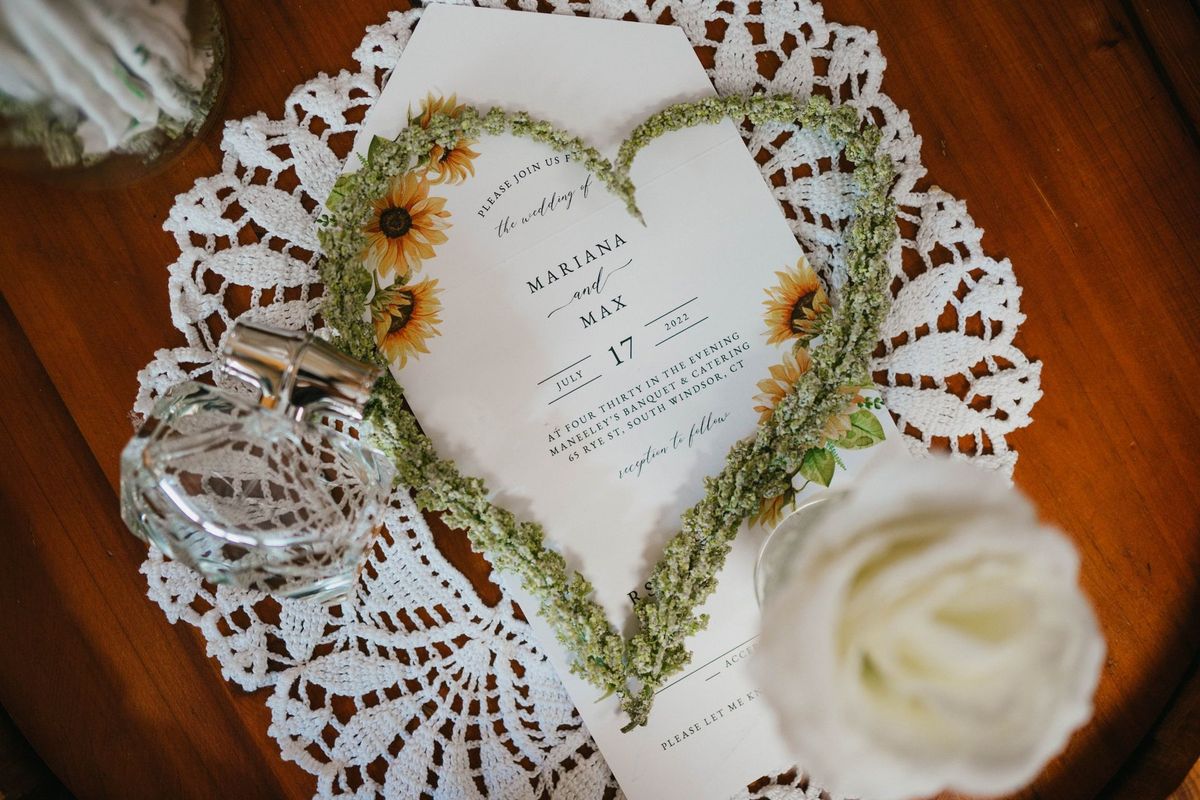
Getting-ready pictures are the quiet opening chapter of a wedding story. Nothing has been announced yet, the guests are still on their way, and the frames tend to be made of small things: paper, metal, fabric and hands. This guide is about how to plan that part of the day, which choices you can make ahead of time, and what the pictures can look like when they are done with care. Examples come from three weddings: Mariana and Max's wedding at Maneeley's, Sadie and Mat's wedding at The Barns at Wesleyan Hills and Jacob and Thea's wedding.
What is a getting-ready set actually for?
A preparation set does three jobs. It introduces the people and the palette before the ceremony begins. It records objects that will not look the same later, such as an invitation that has not yet been handled by guests. And it gives the finished story a slower first chapter, so the faster chapters that follow have something to contrast with.
Couples sometimes treat this part of the day as optional because it is private and nothing formal happens. That is exactly why it is worth a moment of thought. The morning is the only time the objects, the room and the people are all calm, uncluttered and together, and a few minutes of attention then can supply pictures that nothing later in the day will replace.
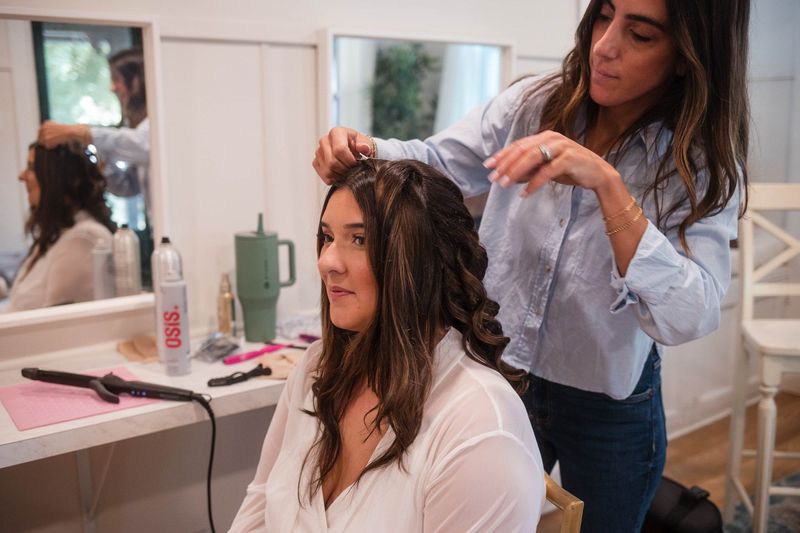
The stylist working on Sophia’s hair above, from Sophia and Tommy’s wedding, is a good illustration of the other kind of preparation picture. A person at work puts someone else in the story without a posed group, and the mirror adds a second view of Sophia and the room around her. In the Sophia and Tommy story, the morning frames also include a dress hanging in front of sheer curtains and vow books beside a window.
Which questions are worth settling before the morning?
Most of the usefulness of a getting-ready set is decided before anyone picks up a camera. A short conversation can settle several practical questions.
- Where will each person get ready, and are those places close together or far apart?
- Which objects matter most, and who will gather them in one place?
- Is there a room with a window, or will the light be mostly artificial?
- Do you want pictures of both people preparing, or only one?
- Is there anything private that should not be photographed?
None of these needs a formal plan. They are the kind of questions that are easy to answer a week ahead and hard to answer at the moment, when someone is looking for a missing shoe. If the two of you are getting ready in different places, say so early, because it affects how the morning is covered and whether the time between locations needs to be considered.
It also helps to decide how much of the morning you want to see in the finished story. Some people want a thorough record of every detail. Others want a handful of frames and a lot of space. Neither is wrong, and the answer shapes how the set is built.
How do you choose the details that matter?
A useful rule of thumb is to pick the objects that carry meaning rather than the objects that merely look good. Invitations, rings, letters, jewellery handed down or borrowed, a favourite fabric, flowers: each of these has a reason to be there, and a picture of it will mean more to you later than a generic still life.
Gathering them in one place before the pictures begin saves time and keeps the room tidy. A clean surface near a window is usually enough. Avoid including things that will date or distract, such as phones, chargers and plastic bottles. They are easy to move before the pictures are made and surprisingly hard to ignore afterwards.
Think about scale as well. A set of details looks best when it includes some wide frames that show the objects in the room and some close frames that show texture. Paper, thread, metal and leather all photograph well up close, and a pair of frames at different distances gives the eye somewhere to travel.
What can a tie, an earring or an invitation add?
Small, specific frames give a preparation set its character. Three examples, from the weddings in this guide, show different ways of doing it.
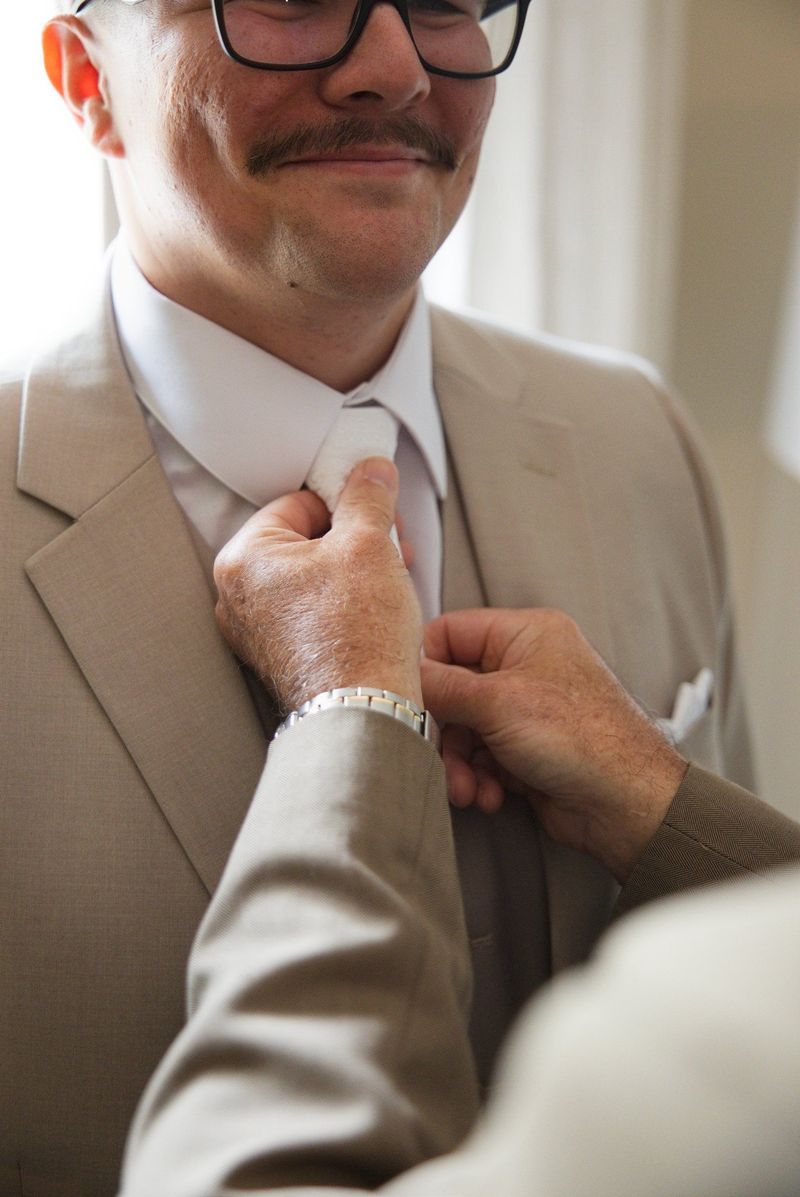
A close frame on a small task can say a lot. In the picture above, helping hands straighten Mat’s tie, and the frame holds only the fabric, the knot and the hands doing the work. The same idea works with a cufflink, a button or a clasp, and it suits any moment when a full-face picture would feel too exposed. In Sadie and Mat’s wider set, another frame shows Mat adjusting his tie beside a window.
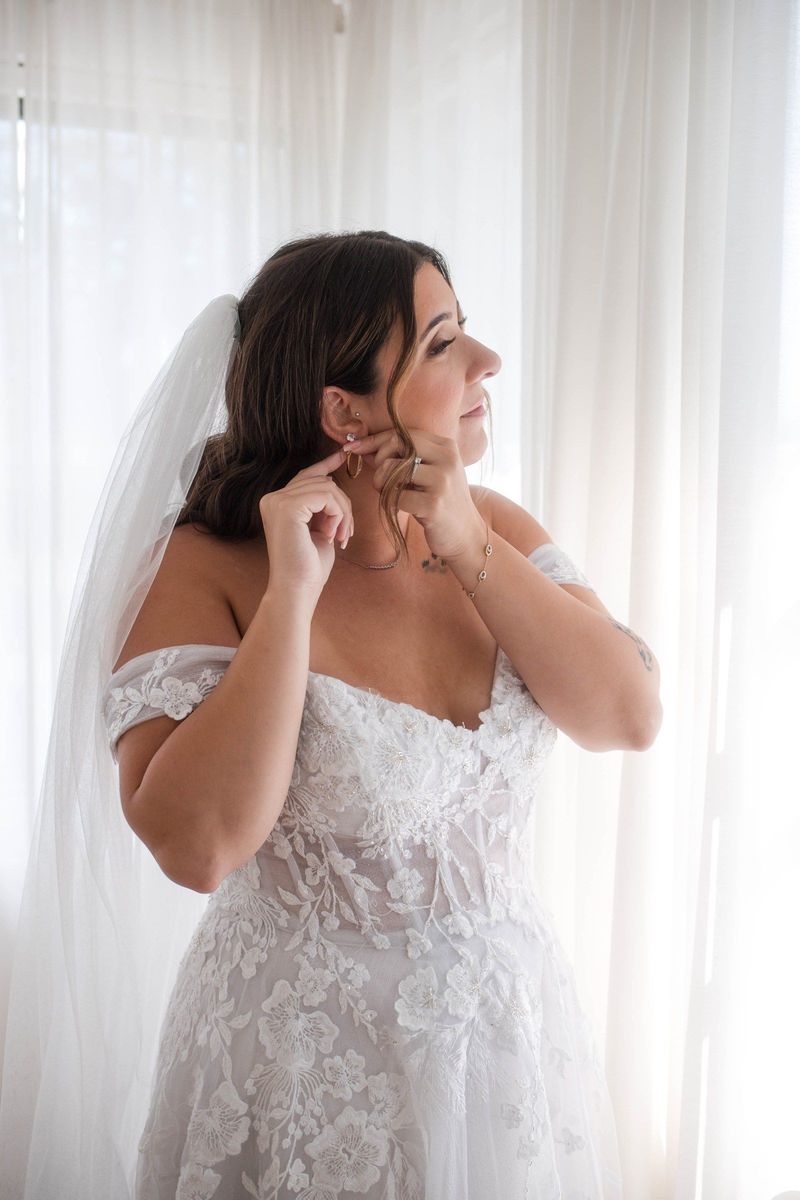
Sophia adjusting an earring beside a softly lit window makes a different kind of picture. It is a small gesture with no posing in it, and it is easy to make without anyone feeling watched. Hands and jewellery are among the most useful subjects in a preparation set because they connect the objects in the room to the people using them.
The invitation on the cover of this guide carries the couple's names, which makes it a good first page for a story. Printed pieces like this are easy to forget when planning, so it is worth setting a copy aside.
How should people appear in preparation pictures?
People in a getting-ready set are most natural when they are busy. A task gives the hands something to do and the attention somewhere to go, and the camera becomes secondary. Fastening buttons, pinning a flower, adjusting a cuff, helping with a clasp: these are real gestures and they read as such.
Direction can help, but it should be light. A suggestion to stand by the window or to take a breath is usually enough. Heavy posing in a preparation room tends to feel out of place, because the setting is domestic and the mood is private.
Think also about who else is in the room. Friends and relatives who help with preparation are part of the story, but a crowded room can be tiring for the person getting ready. Agreeing in advance who will be there, and who will step out when pictures are made, keeps the atmosphere calm. If you would rather keep some moments unphotographed, say so; a good set is built on trust, not on coverage for its own sake.
What helps a room photograph well?
Preparation rooms are usually ordinary rooms, so small choices make a visible difference.
Window light is generally easier to work with than overhead light, because it is soft and has a direction. Curtains that can be opened help; blinds that cannot are a limitation. If the room is dim, mention it in advance so alternatives can be considered.
Clutter is the second factor. Bags, bottles and chargers are easy to move before pictures begin. A tidy corner is worth more than a large room full of belongings.
Finally, consider the background. Plain walls, wood or fabric make details stand out, while a busy patterned background competes with them. A neutral surface for the objects, such as a table or a bed with a plain cover, costs nothing and cleans up every detail frame.
What style choices can you make?
Beyond logistics, a getting-ready set involves a handful of taste decisions, and it helps to notice them before the morning rather than during it.
The first is how documentary or how arranged you want the pictures to feel. A documentary approach leaves people to get on with their tasks and picks up what happens. An arranged approach sets up a few frames, such as a dress hung against a window or rings laid on a favourite book, and then steps back. Most good sets mix the two, with arranged detail frames and unarranged people frames.
The second is colour. Some couples prefer a warm, bright look, others a calmer, more muted one, and a few like the idea of black and white for a handful of frames. There is no correct answer, but it helps to point to examples you like so the set can lean in that direction.
The third is how many frames of one kind to keep. Five pictures of the same pair of shoes add little, while one wide, one close and one with hands in them add a lot. Asking for variety, not volume, is the simplest way to keep a preparation chapter focused and easy to enjoy later.
How do preparation pictures work alongside film?
If the day includes a highlight film as well as photographs, preparation is a place where the two can support each other. A photograph can hold a detail still, while moving footage can carry the sense of a room being busy. Planning for both means agreeing, again in advance, which moments should be quiet and which can be lively.
For a longer look at how the whole day can be paced around photographs and film, the wedding photo and video timeline goes through the day block by block. The wedding video shot list is useful if you want to make a list of preparation moments to share.
How does this connect to the finished story?
In a finished wedding story, preparation pictures act as the first chapter. In the Mariana and Max story, the getting-ready chapter opens the story with preparation frames, and in the Sadie and Mat story the first chapter moves from the exterior of the venue to a tie, a shoe, a bouquet beside a mirror and a wedding party reacting to a dress. This guide uses the invitation and the rings from one wedding and the tie and the shoe from the other as examples of objects and gestures.
The next step in a typical set is the first look and the portraits, which are covered in the guide to couple and bridal portraits. If you are still deciding what kind of coverage suits you, read about wedding photography and wedding photography and videography, or browse the portfolio.