

Medical aesthetics practice photography
Youthful Images
Treatment rooms, recovery spaces and people from an Avon aesthetics practice.
Explore the projectClassroom and education photography
Classroom photographs for RSM–Avon, showing students, teachers and shared learning moments for The Valley Book.
Photographed for The Valley Book.
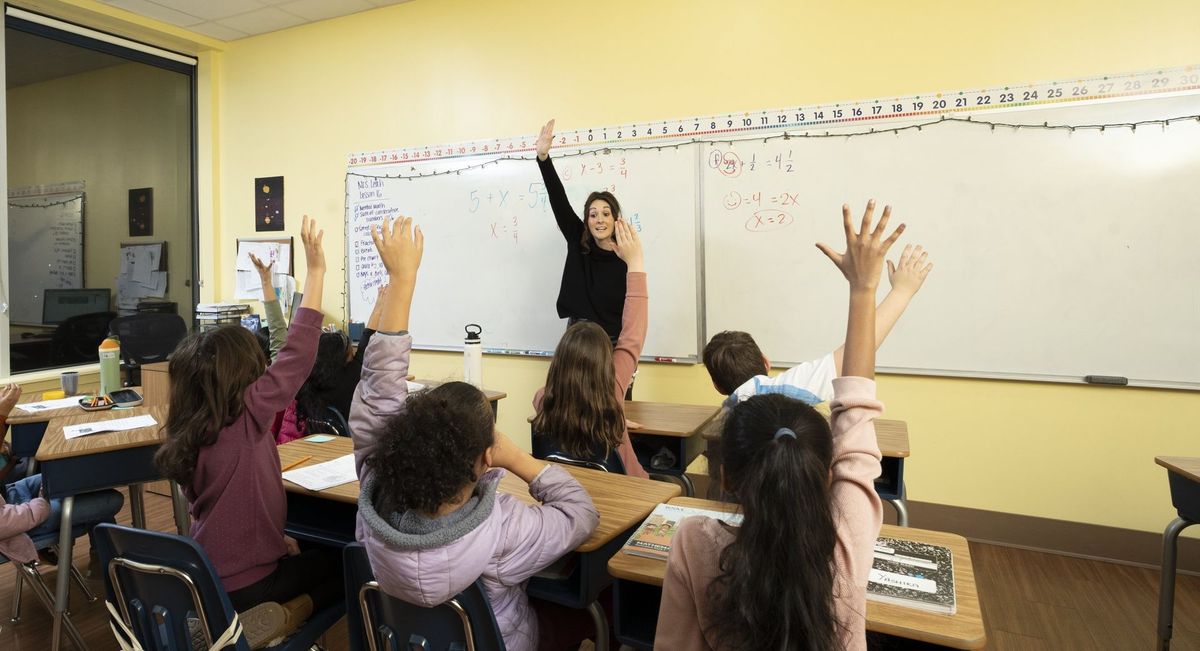
The Russian School of Mathematics, known as RSM, is an after-school math enrichment program for students from kindergarten through twelfth grade. It was founded in 1997 by Inessa Rifkin and Irina Khavinson, whose first classes were held at Rifkin's kitchen table outside Boston. RSM–Avon brings that after-school program to the local community.
For The Valley Book, our photographs bring the focus into the classroom: the whiteboard, shared desks, small groups and individual attention.
Classroom photography is as much about timing as framing. A lesson has moments when hands go up, heads bend over pages and a teacher steps toward a student, and each of those moments happens quickly.
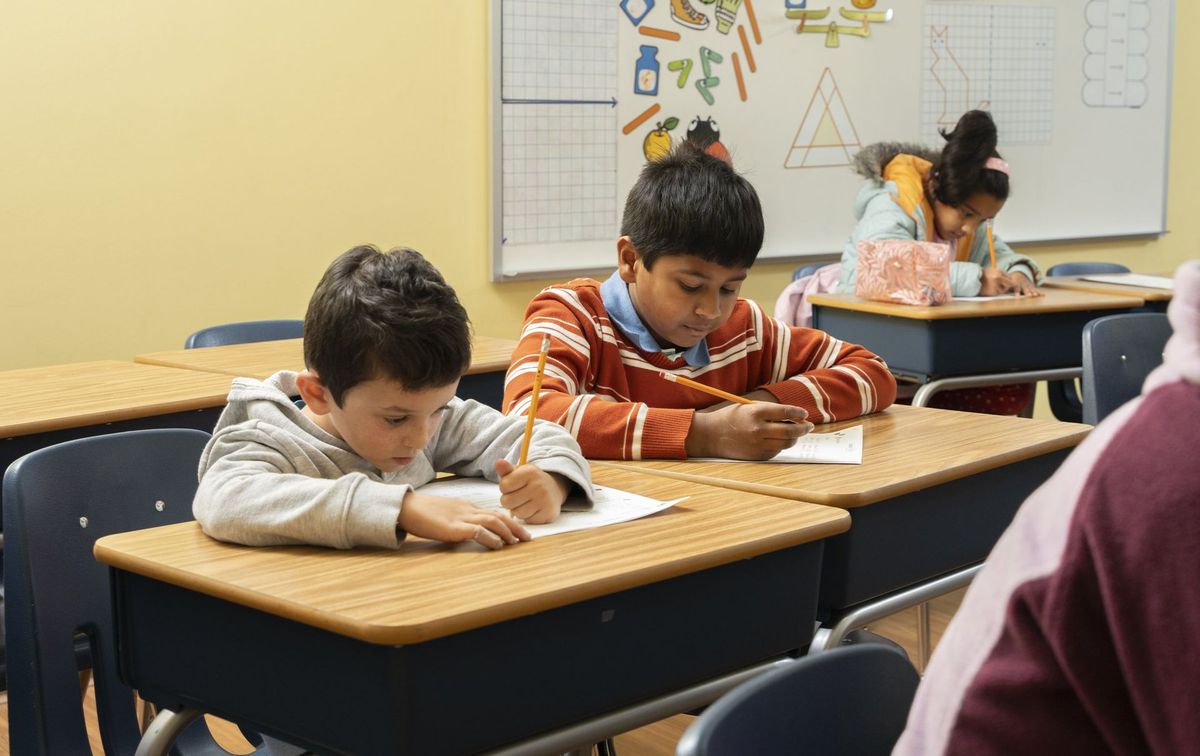
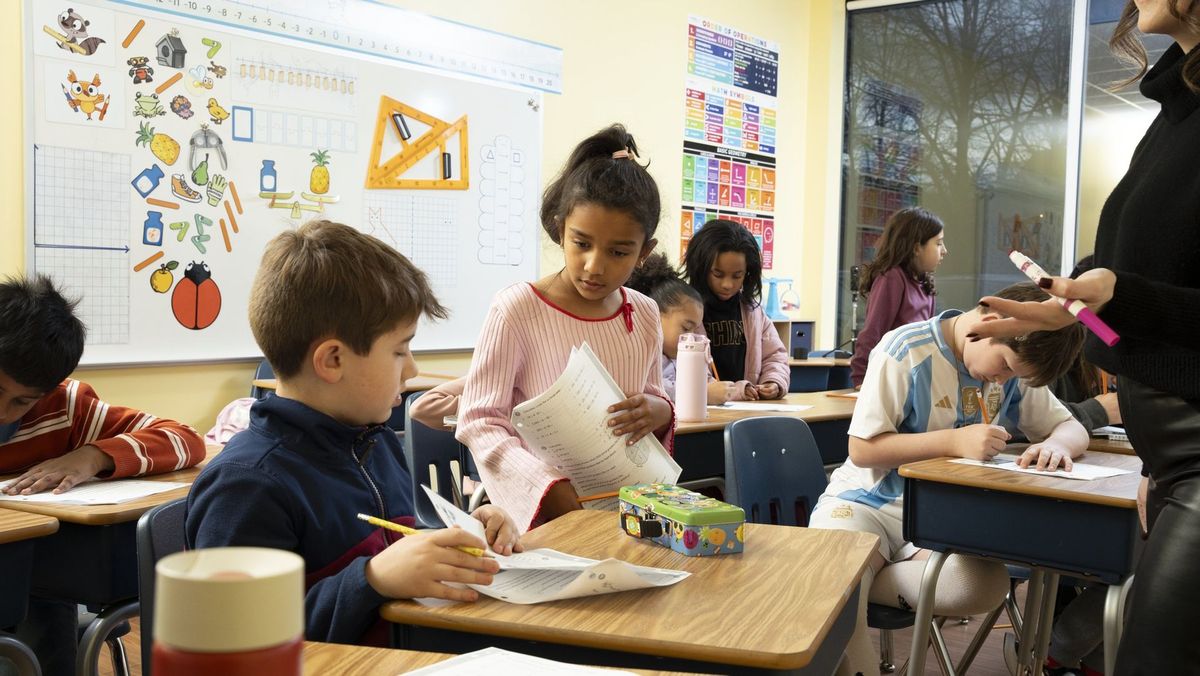
The hero frame shows students raising their hands while a teacher points to the whiteboard. This second wide frame steps back to show students writing at classroom desks beneath a colorful mathematics display.
Together they set the scene. One emphasizes raised hands and the teacher at the board; the other shows students writing at desks beneath a colorful mathematics display. The colorful display above the desks adds a bright band of color and tells the viewer, without a caption, that this is a room about numbers.
A wide classroom frame also gives a publication a flexible image. It can run across a page with a caption, or be cropped tighter for a smaller space, because the desks, the display and the students all sit inside the frame.
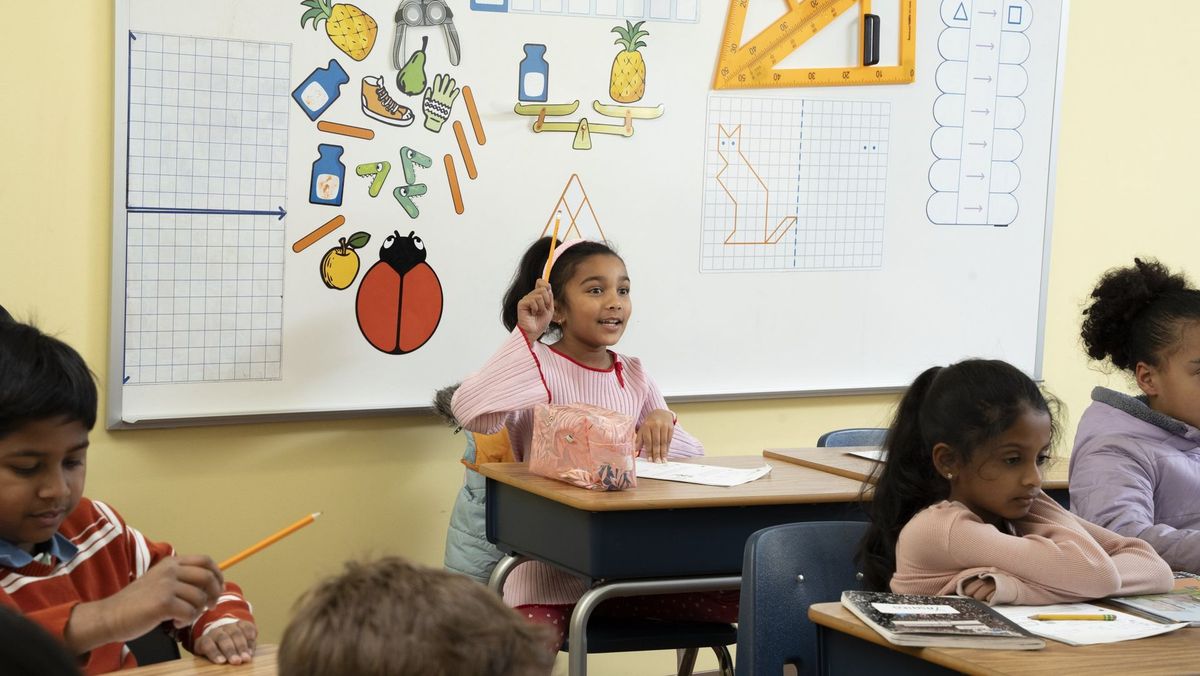
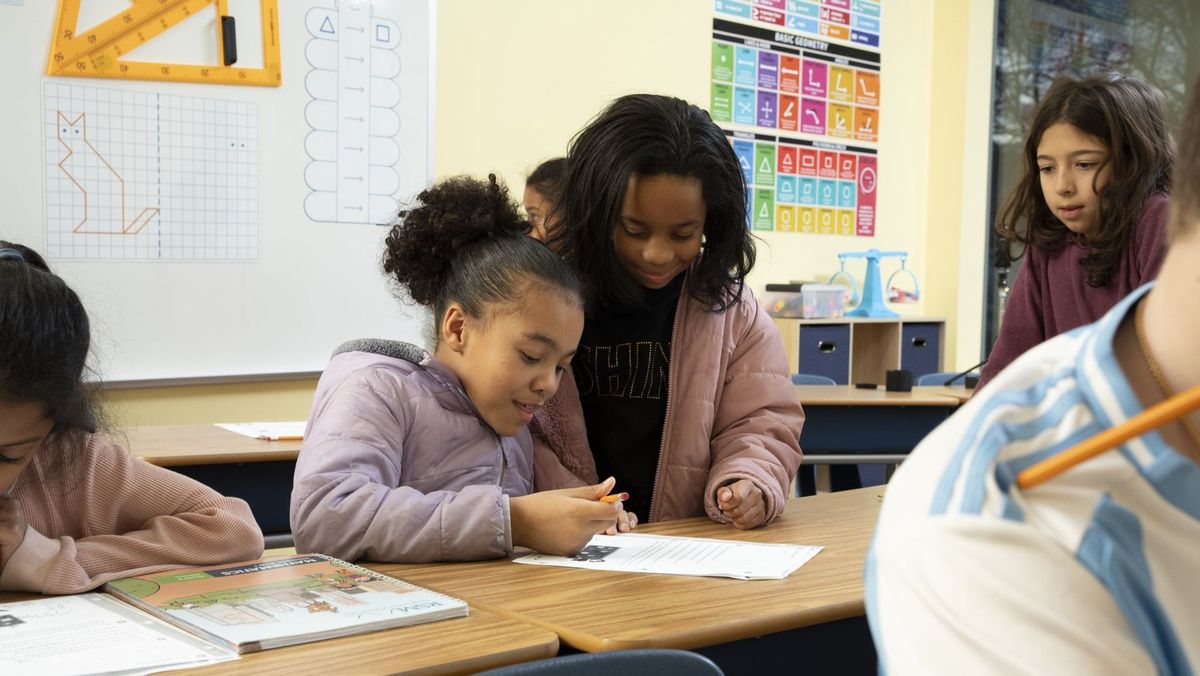
Smaller moments sit closer to the faces. A student smiles with a raised hand during a lesson, and two students lean over a workbook together.
These pictures carry engagement through expressions and gestures. A raised hand and a shared workbook say more about a learning environment than a line of copy. Keeping the frame close lets the expressions carry the image.
Both frames reward being kept simple. With no props beyond a page and a pencil, the viewer's eye goes straight to the faces and the gestures, which is where the learning is happening.
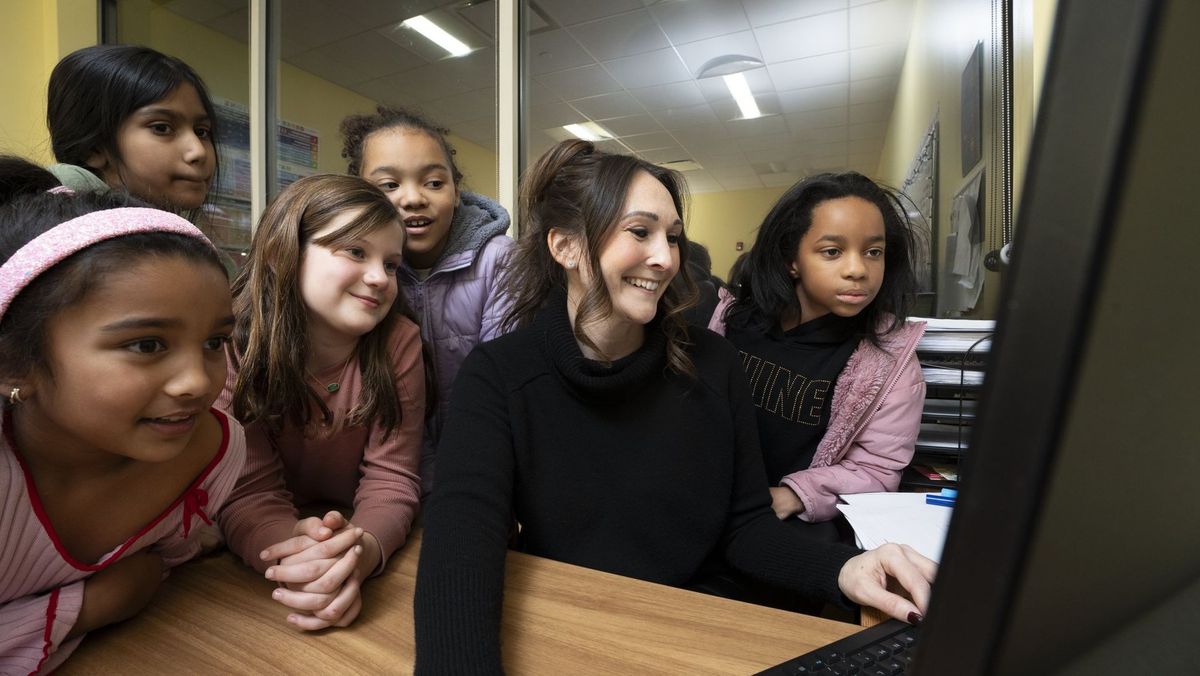
Group frames show the room's social side. Students work together with small colorful learning pieces at a desk, and a teacher and students gather beside a computer monitor.
Hands-on materials give the image color and a clear subject, while the group around the monitor shows that technology and teacher guidance sit side by side. Both frames tell readers that the program is active rather than passive.
Between them, the two frames show a range of classroom activities: hands-on materials in one and teacher guidance around a screen in the other.
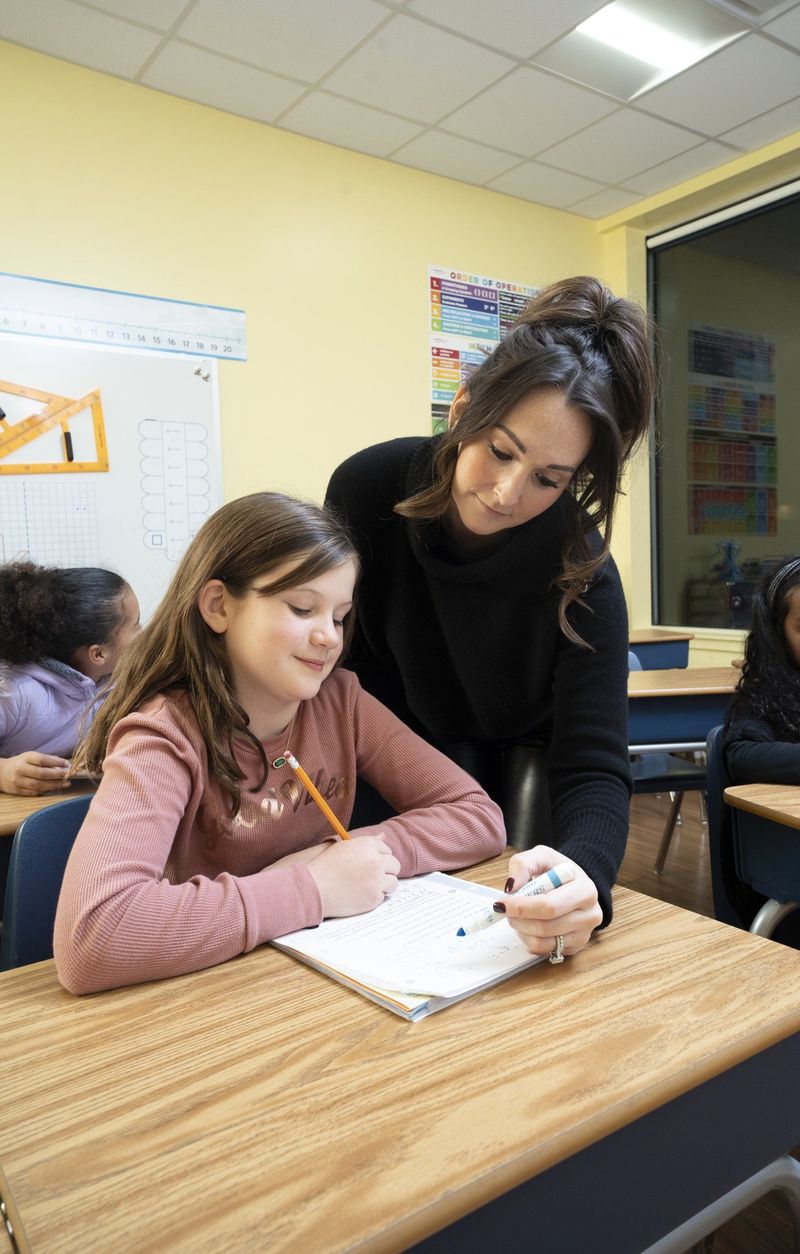
The final upright image shows a teacher leaning beside a student working at her desk. It is the quietest picture in the set and the most personal.
Ending on individual attention gives the sequence a clear close: from the whole room, to pairs and groups, to one student and one teacher. For a session like this, planning that arc in advance helps a publication choose the right image for any size of space.
Upright framing suits this moment. The teacher's lean and the student's focus form a diagonal that the tall format holds comfortably, and nothing else competes for attention.
If you are planning classroom photography, agree early on which spaces and lessons will be photographed and how families and staff have been informed. Wide frames help establish the room, close frames carry emotion, and a mix of both gives designers options.
Look for natural gestures such as a raised hand, a shared page or a teacher leaning in. They tend to read well at small sizes, which matters when a feature appears in a guide.
It also helps to plan the sequence of a set. A wide frame to set the scene, a few close frames for expression, a group frame for collaboration and a quiet one-on-one frame for the close give a layout designer everything needed for a full page or a small sidebar.
Portraits and learning moments photographed for schools and programs.
Feature photography planned around how a publication will lay out the page.
Every kind of photography Legend offers in Connecticut.
Medical aesthetics practice photography
Treatment rooms, recovery spaces and people from an Avon aesthetics practice.
Explore the project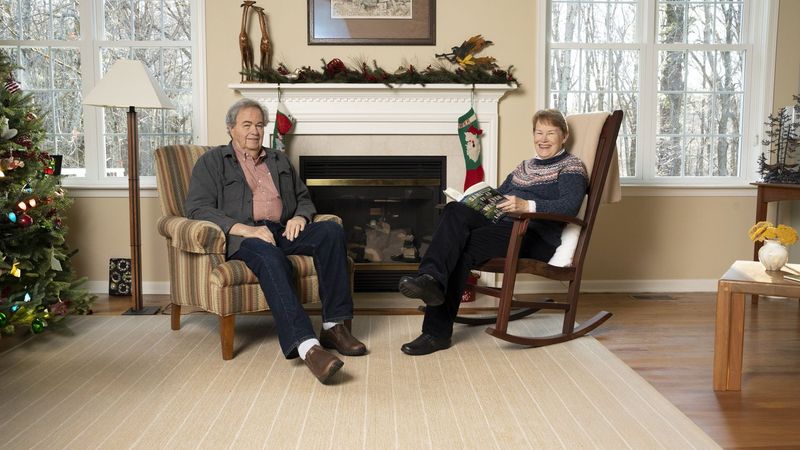
Retirement community lifestyle photography
Fireside seats, a kitchen stove and a jigsaw puzzle: everyday moments in Bloomfield.
Explore the project
Care team group portraits
Three team portraits: the entrance awning, a white gazebo and a warm interior.
Explore the projectTell us about the people, rooms and products you want shown, and where the pictures will appear.