
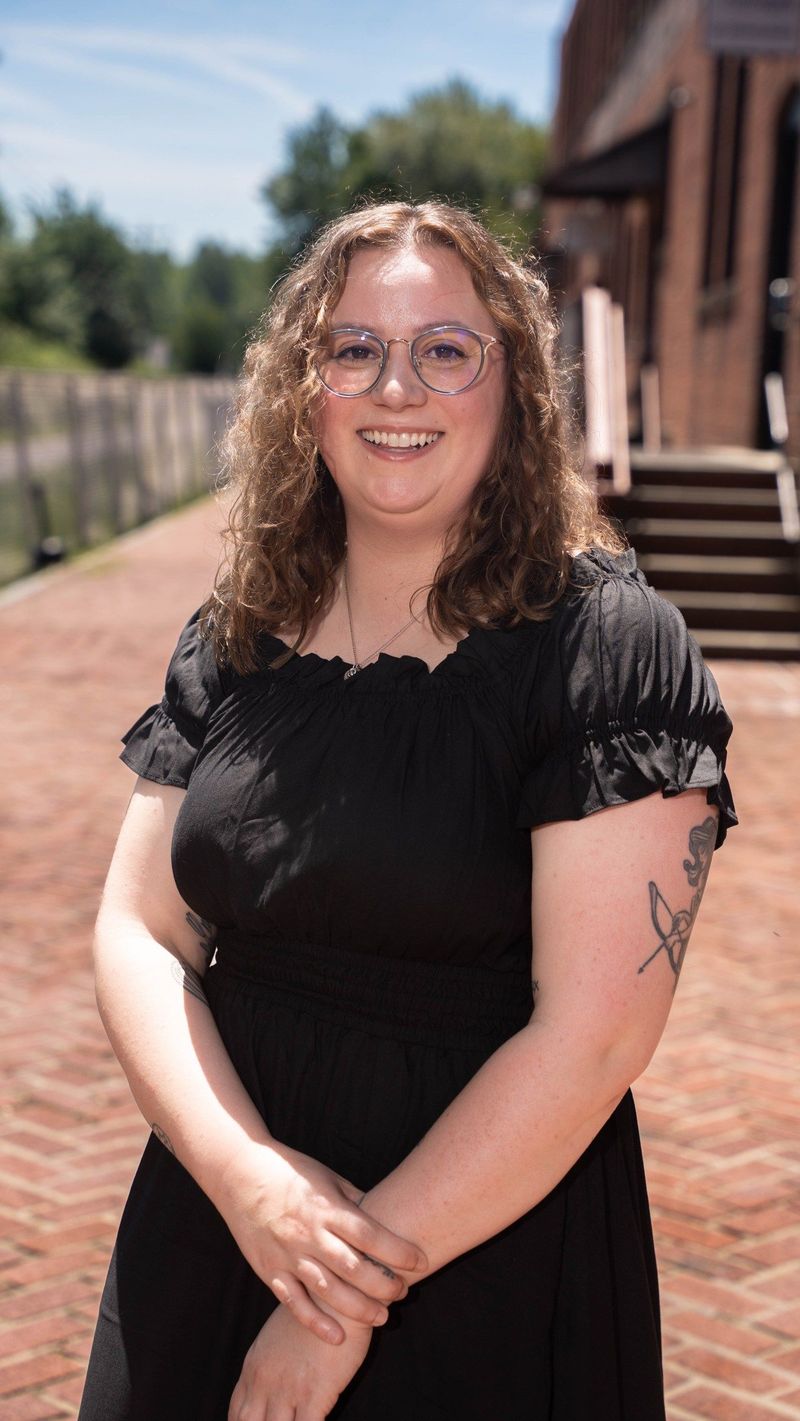
Headshots and personality portraits
Brooke Team new recruit: headshot and personality portraits
A professional headshot and relaxed personality portraits made outdoors beside the office, with a dog.
Explore the projectTeam headshot event
About eighteen people were photographed in a single session before the same dark wood-slat background, each in their own expression, clothing and pose. Together the portraits read as one company directory.
Photography by Legend Photo & Film.
Overview
A team page, an email introduction and a company profile all benefit from portraits that belong together. This project shows what that looks like. Team members from the Brooke Team were photographed at a headshot event, with the aim of producing portraits that employees and the company can use on profiles and directories.
The goal of a session like this is a single cohesive set that still lets each person look like themselves. The three portraits at the top of the page are a quick sample: three people, three different looks, and one shared background that ties them together.
Shared backdrop
The primary directory portraits share the same dark wood-slat background and the same vertical framing. Those two constants are what make a directory read as a directory. When the background and the frame shape stay the same, the viewer’s eye moves from face to face without being pulled toward the setting.
The seated environmental alternates, shown near the end of the page, extend that range. They step away from the standard standing portrait for people who want something more relaxed, and one of them is a horizontal frame.
A simple, repeatable background has a practical benefit for a team. The dark slats accommodate individual wardrobe without competing with it, so people can wear what suits them while the focus stays on their faces. Because the slats run vertically behind everyone, the eye reads them as texture and not as a scene, and the set can sit in a grid, a row or a rotating strip on a team page and still feel orderly.
Smiling portraits
Several portraits are the most direct kind of headshot: a smile toward the camera, shoulders square, and nothing else asked of the pose. In a directory these are the workhorse pictures. An open expression carries even at a small size, so they work well in the places a small, friendly face is needed, such as a profile thumbnail or an email signature.
What makes the pictures feel natural is the expression. Direction during a session should encourage a real smile and not a held one, which is why a photographer talks with people throughout and takes more than one frame. The finished set then shows relaxed faces, and that is what a visitor remembers about a team page.
Arms folded
Folded arms are a common pose in this set, and it is not repeated by accident. The pose gives a person something to do with their hands, creates a confident shape and varies the silhouette within a consistent frame. A hands-in-pockets variation reads as more relaxed, and both help people who feel stiff when they are asked to simply stand.
Giving people two or three simple poses to choose from is a practical way to run a larger session. Each person lands on a pose that feels natural, and the finished directory looks varied without anyone being asked to improvise. The poses also respond differently to different clothing, so a simple shift in stance helps a jacket, a vest or a plain shirt sit well in the frame.
Standing portraits
The remaining standing portraits keep the same background and a similar distance from the camera, with small differences in stance, such as a hand at the hip or hands together. Keeping the distance steady matters more than it seems, because it keeps each face about the same size across the page.
These uncropped vertical portraits are also flexible. Each can be cropped to a head-and-shoulders square for a small profile image or kept as a longer portrait where a page has the space, and the background is tall enough to allow either crop without losing the edges. Leaving room around the subject at capture is what makes that later choice possible.
Alternates
A few further pictures extend the range. One is a second pose in a pink jacket with arms folded. One shows a person seated upright in a leather chair for an environmental portrait, and the last is a relaxed seated portrait, horizontal, with a person smiling and their legs over the chair arm.
Alternates are a useful part of any large session. They give a person a second choice, or a more relaxed picture for places where a looser look suits the page, such as an about page or a profile where personality matters more than formality.
How sets get used
A set like this can support a company team page, individual profile pages, LinkedIn and other professional profiles, email signatures, proposals, press materials and internal directories.
Uniform photos also make a company easier to read from the outside. When every team member appears in the same format, a visitor can compare people quickly, recognize who is who and get a sense of the size and personality of the team. A company that posts uneven pictures asks the visitor to adjust to each one.
The alternates add flexibility. A person who prefers a seated, relaxed portrait for a profile and a standing one for a team page can have both, and a team can decide later which picture belongs where without needing another session.
For a directory this large, the practical benefit is time. One session produces the whole set, and later additions can be matched to it, which is the subject of our article on matching new employee headshots with existing team photos.
Large-team planning
Photographing a large team in one session is mostly a planning job. Here is what usually matters for any session with this many people.
A single location, a single background and a single portrait format keep the setup fixed so that time goes to the people. A list of who is coming and when avoids queues. Clear guidance on clothing, such as bringing something they would wear to meet a client, helps people arrive ready. Giving everyone a few simple poses, and an alternate or two, means no one has to improvise. For more, see our article on preparing for team headshots and our headshots page.
The same thinking applies to teams of any size, including real estate teams, professional offices and growing companies that add people over time. Decide early where the portraits will be used, keep the setup the same for everyone, and plan for the people who will join later so their pictures can match.
Beyond the headshot
A directory of consistent portraits treats the team as one brand. Teams can build on a portrait session with individual introductions, question-and-answer clips and explainer videos, so that each employee is also known as an individual.
The same prompts can be put to each person, such as what they do, who they help and what a customer should know before a first call, and each person answers in their own voice, with their own expertise and style. Short employee bio and introduction videos, recurring question-and-answer clips and social content can then give different customers a way to connect with the staff member who suits them.
Our article on team headshots and employee bio videos in one session explains how the two can share a single day, and our personal-brand video content plan lays out a four-week example.
Consistent portraits for individuals and whole teams.
Introduction videos for individual team members.
Group and team photos for company pages.
Recurring posts and clips built around your people.
Video about the company for candidates.
Planning wardrobe, location and flow before headshot day.
How to add new people to an existing set.
Whether headshots and bio videos can share one session.
Headshots and personality portraits
A professional headshot and relaxed personality portraits made outdoors beside the office, with a dog.
Explore the projectTell us how many people, where the portraits will be used and how you want the set to look.