Samantha and Chris’s highlight film runs 5:08, and it is built from places and people more than from a schedule. A bouquet rests beside a rocky stream, a groom in a light cowboy hat waits on a wooded path, a ceremony takes place beside the water, and a reception fills with colored light. Here is a walk through what the film shows, in the order it shows it.
8 minute read
Watch the film
Press play on the film above to watch the full highlight with its original sound.
The story below follows the film in the order its scenes appear, with a frame from the finished film beside each stage.
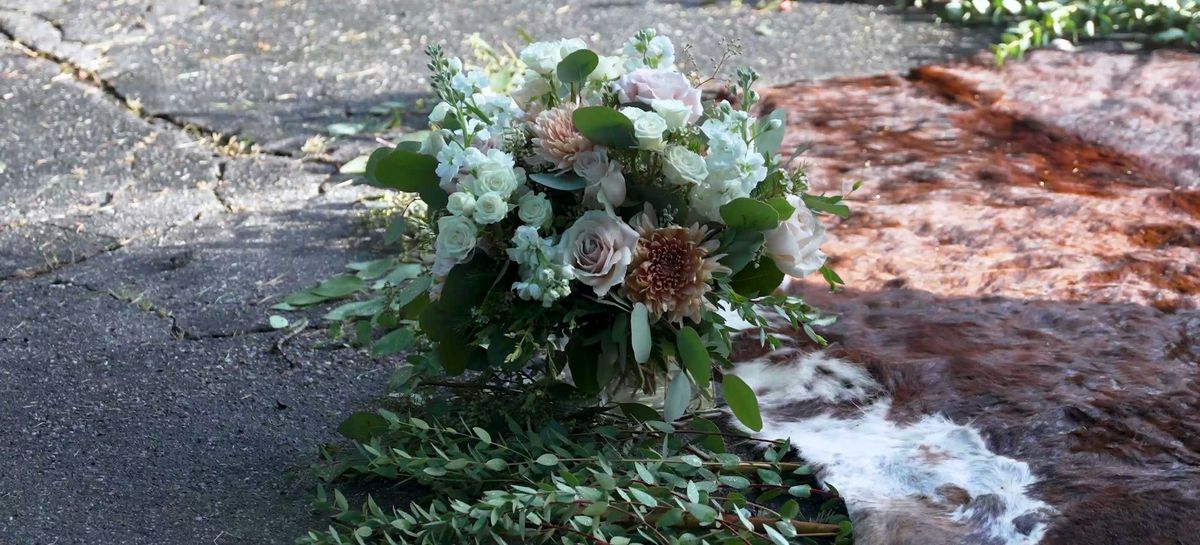
A bouquet beside a rocky stream
The film shows a wedding bouquet beside a stream that runs over rocks, and the water gives the frame its movement while the flowers stay still.
It is a quiet image to begin with. Before the people appear, the viewer learns that this wedding happens outdoors, near moving water, among stone and green. The setting comes first and the people arrive into it.
Opening on flowers also sets a pace. Nothing is hurried in this first image. The stream keeps running, the bouquet keeps its place, and the film gives the viewer a moment to settle before the day begins to gather around them.
Details like this are easy to overlook on the day itself, when so much is happening around the people. A film can hold on one for a few seconds and let it carry the mood of the setting.
Chris waits on the wooded path
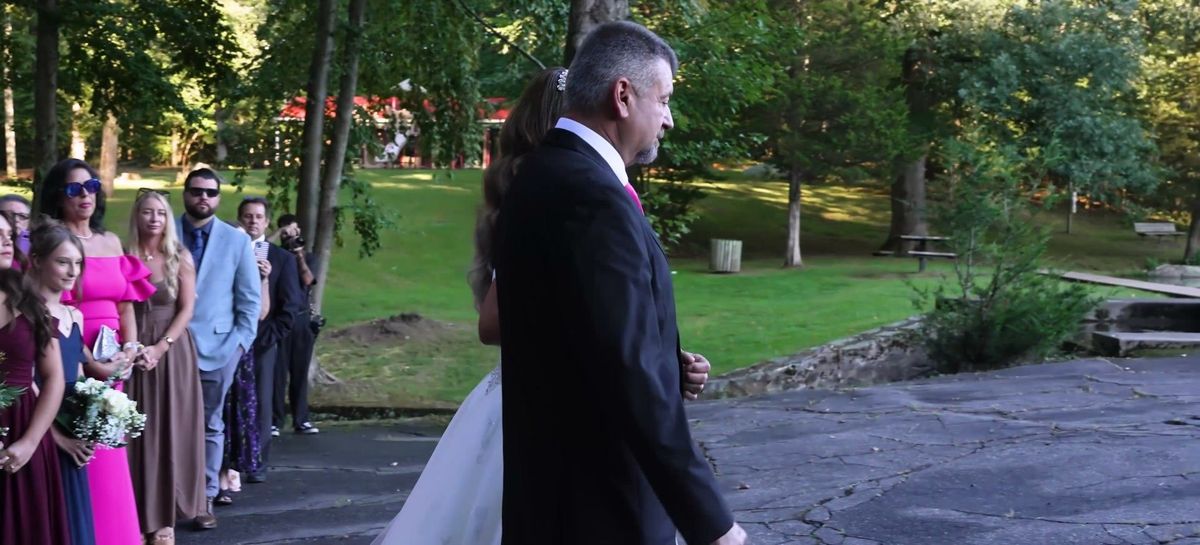
Shortly before the one-minute mark, the film moves to a wooded path. Chris stands there in a dark suit and a light cowboy hat, with the wedding party behind him. The trees frame the group, and the light falls softly through them.
The hat is the detail that stays with you. It sets Chris apart from the dark suits around him and gives the scene a relaxed, personal character.
The wedding party stands in the background rather than the foreground. They are present and part of the picture, but the film keeps its attention on the man in front, and on the sense that something is about to begin.
A waiting moment is one of the quieter parts of a wedding day, and it is easy to lose in a busy schedule. Here it becomes a small scene of its own: a group on a path, standing together before the ceremony.
The ceremony beside the water
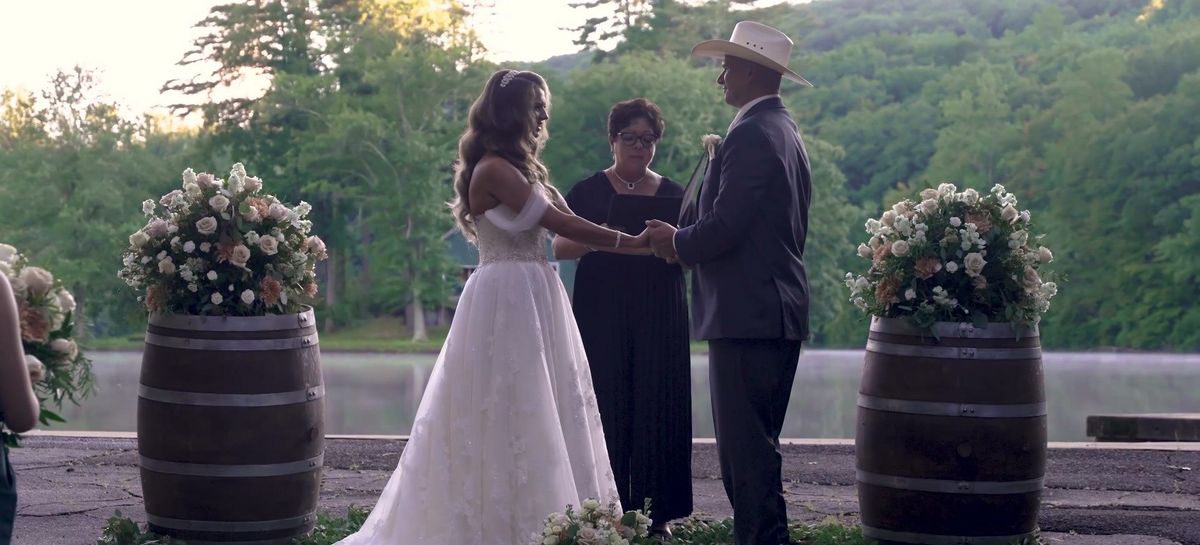
At about a minute and a half, the film reaches the ceremony. Samantha and Chris face each other outdoors beside the water, with an officiant standing between them.
The composition is simple and generous. The couple is turned toward one another, the officiant stands in the middle, and the setting stays visible around them. Flower arrangements sit on barrels nearby, adding color to the edge of the scene without competing with the two people at its center.
The film shows what a viewer would want to see here: who is standing where, how close they are, and how the space around them is arranged. The posture of the couple and the stillness of the place are left to speak for themselves.
Because the picture is wide, the water and the surroundings stay in view along with the faces. That is a deliberate choice of frame. A ceremony is not only the two people in it; it is also the place they chose to stand in.
If you are thinking about how a ceremony should be recorded, our guide to ceremony coverage describes the beats we pay attention to.
Walking past the guests
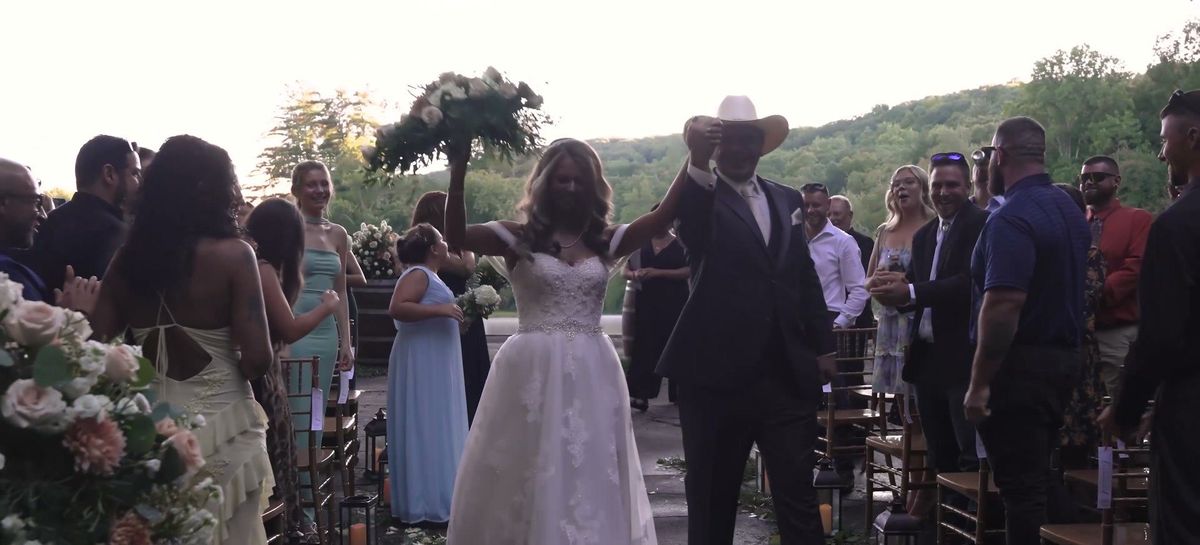
Soon after the ceremony, the film follows Samantha and Chris as they walk together past their guests. The people on either side are close to the path, and the couple moves between them.
This is where the mood of the film shifts. The ceremony was still and focused; the walk afterward is open and moving. The guests stand along the path, close to the couple as they pass.
The movement keeps the walk in view, with the couple in motion rather than posed. It reads as the point where the ceremony gives way to the celebration.
It also shows the people who were there. Without counting anyone, the viewer sees guests on both sides of the path, which suggests a wedding shared with a gathering of family and friends.
Embraces and greetings outdoors
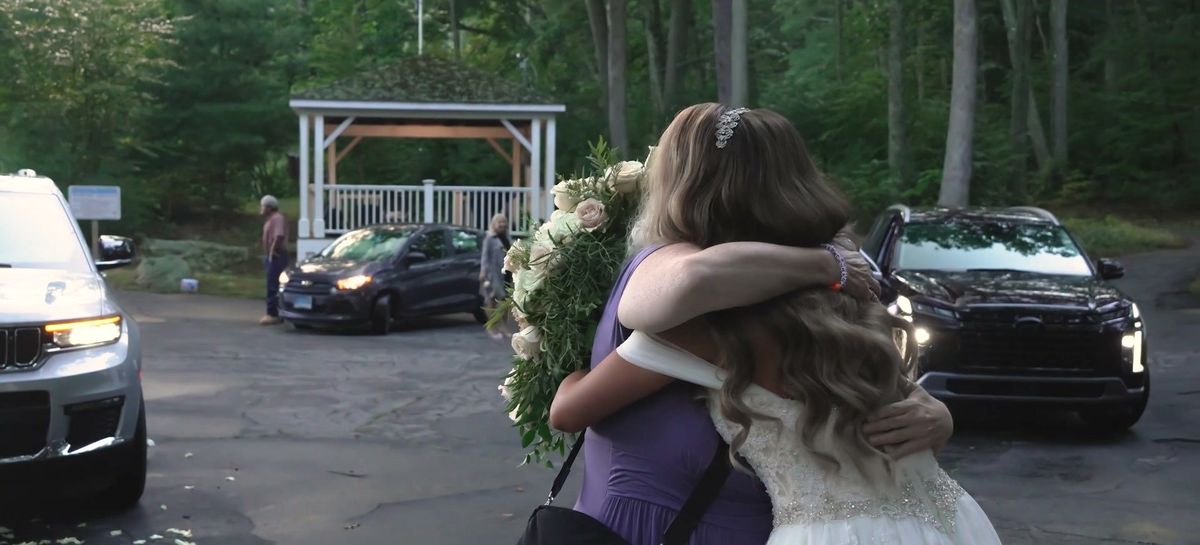
After the walk, the film slows to a series of closer moments. Guests greet the couple outdoors, and in one frame Samantha embraces a guest. The scenes are short, but they are some of the most human in the film.
An embrace is a different kind of image from a ceremony. People hold each other, and the camera is near enough to see the closeness.
The editing places these greetings together, so that they read as a stretch of time rather than isolated clips. One embrace leads into another, and the viewer takes in the warmth of the gathering instead of a single instant.
Greetings and embraces show a different side of a wedding from posed portraits, and they are worth asking about in advance. Telling your film team which relatives and friends you most want to see greeted gives them a reason to stay close to those people.
Portraits of the couple tell one side of the day, while reactions like these tell the other. Our piece on couple and bridal portraits talks about leaving room for both.
Sunflowers, lace and a lit lantern
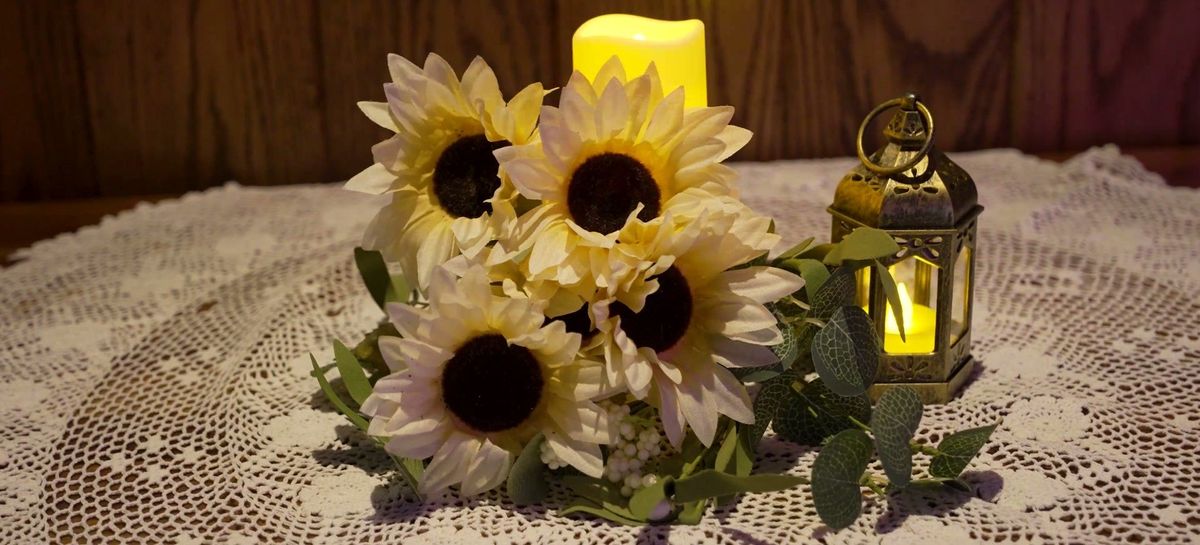
The film then moves to the reception, and it turns to a detail again. On a table, sunflowers stand alongside white flowers, with lace laid beneath them and a lantern that is lit.
The yellow of the sunflowers is the warmest color the film has shown so far. Against the white flowers and the pale lace, it reads as a deliberate palette, and the glow of the lantern adds to it from within the frame.
Personalized printed can coolers also appear among the details of the reception. They are a small, practical touch, and they make the table feel like it belongs to these two people and no one else.
Setting a table is slow, careful work, and by the time guests arrive it is mostly invisible. The film gives the arrangement a moment of its own, so that the care put into the room is recorded alongside the people who enjoyed it.
Dancing under pink and purple lights
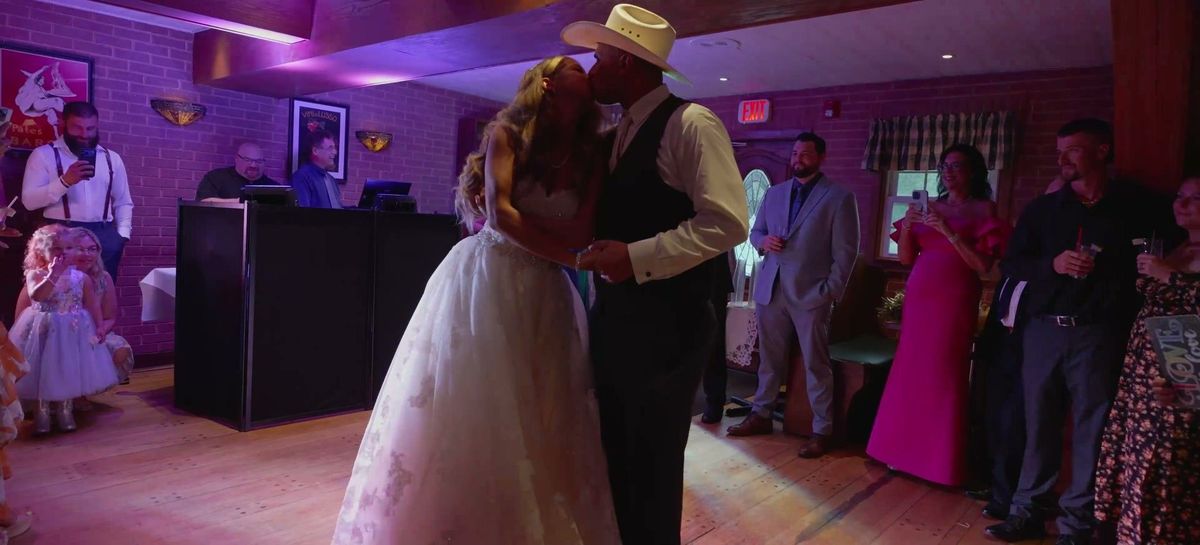
Inside, the reception takes place in a wood-paneled room, and the film changes character with it. Pink and purple lights wash across the space, and Samantha and Chris dance together beneath them.
After so much daylight and green, the contrast is strong. The warm wood gives the room a settled, cabin-like look, while the colored light makes it feel lively. The couple moves through both at once.
The dance marks the film’s move from outdoors to indoors. The earlier scenes take place by water, among trees and in open air; the dance takes place inside, among walls, music and light.
A dance is also a very different subject for a camera. Where the ceremony asked for stillness, the dance asks for movement, and the film follows the couple closely enough to keep them in view as they turn.
For more on how we think about this part of a wedding, see our guide to first-dance coverage.
A gold backdrop and two young guests
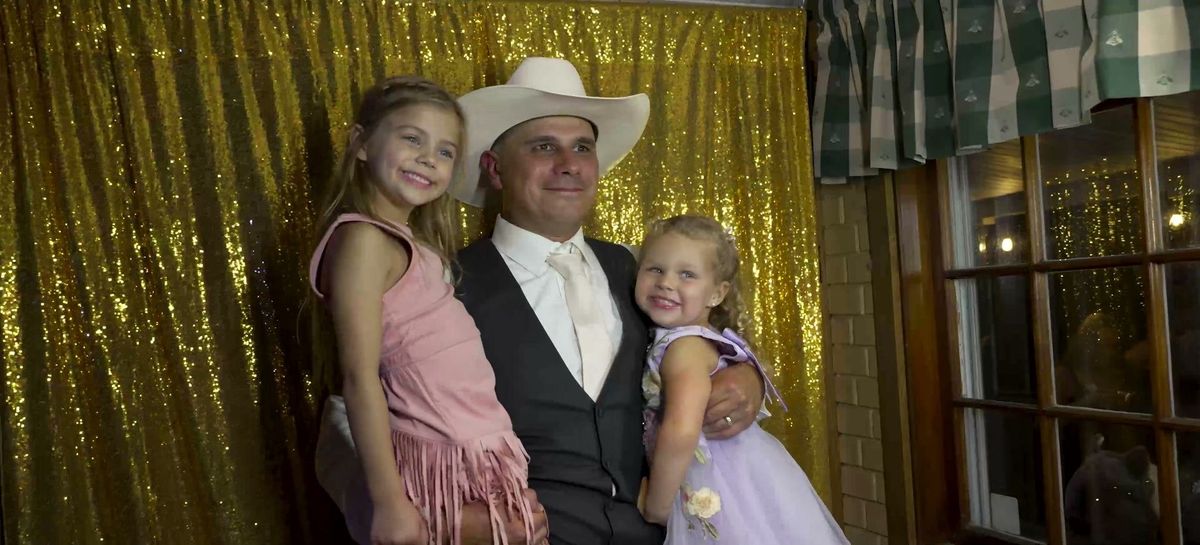
Midway through the reception, the film pauses at a gold backdrop. Chris stands in front of it with two young guests, and the three of them pose for a photograph.
It is a playful interruption. The dance floor was crowded and loud, and here the frame is calm and bright, with the shimmer of gold behind the people in it.
Chris is the center of the shot, standing with the two young guests as the three of them face the camera. The moment shows a stop away from the dance floor, among the people around him.
Moments like this show that a reception has more than one center. There is music and there is dancing, and there are also corners of the room where guests gather. A film that includes them gives a fuller picture of the evening.
A lively dance floor and a smiling bride
In the closing stretch, the film gives the dance floor its full energy. Guests move, the lights keep changing, and the groom’s hat and vest can be seen on the dance floor.
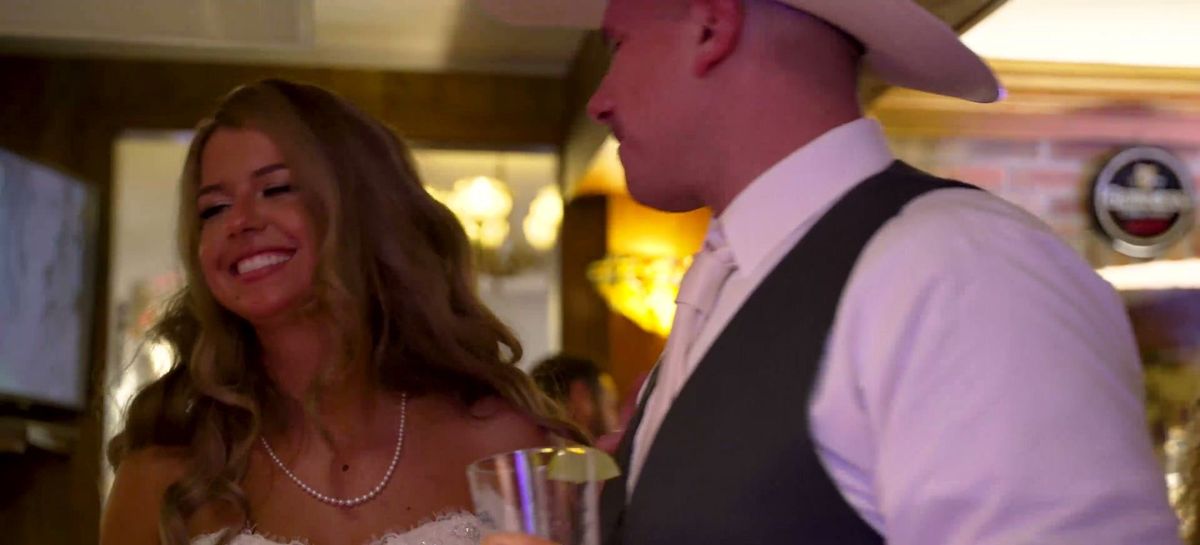
The last frame we show, from near the five-minute mark, is Samantha smiling beside Chris during the reception. It is a relaxed, open expression, set against the stillness of the ceremony earlier in the film.
Taken as a whole, the film moves from a quiet detail beside a stream, through a ceremony beside the water, to a room full of color and movement. Its scenes follow the setting and the people as they appear, from outdoor path to indoor dance floor.
If you are planning your own wedding film
A film like this works when the setting, the people and the small details all get time on screen. If your wedding has a place that matters to you, such as a stream, a path or a particular room, say so early, so that it is part of how the day is recorded.
It also helps to tell us about the details you have chosen: the flowers, the table settings and anything personalized. These are easy to miss while the day moves quickly, and a short list beforehand makes sure they are noticed.
Finally, think about who you most want to see in the film. Parents, friends and the guests who travel the farthest all appear more naturally when we know to look for them. You can see how we approach coverage on our wedding videography page, or compare options on the video and photography page.