Corporate video
From Written Procedure to Finished Training Video: A Real Project Breakdown
DRAFT ONLY, not a completed case study. How a written procedure becomes a storyboard and then a training module, waiting on a verified client project.
By Tyler Rivera 6 min read

DRAFT ONLY. This is not a completed case study. We do not have a verified, completed client SOP training project to describe: no client name, no actual procedure, no storyboard, no shoot notes, no finished module and no client feedback. Everything marked [TYLER TO CONFIRM: ...] is waiting on that material. The sections around it describe only our documented approach to training video. This post must stay unpublished until each marker is replaced with verified material or its section is removed, and the title may need to change if the project does not fit it.
What evidence is missing?
Our site describes how we plan training video, but it does not record a finished client procedure. Before this can be a real project breakdown, we need:
- [TYLER TO CONFIRM: the client project, written permission to describe it and whether the client can be named]
- [TYLER TO CONFIRM: the written procedure and permission to summarize it, with anything confidential removed]
- [TYLER TO CONFIRM: the storyboard or shot list as it existed, or a sanitized copy]
- [TYLER TO CONFIRM: what was filmed, where, with whom, and the access rules agreed]
- [TYLER TO CONFIRM: who reviewed the steps for accuracy and what they changed]
- [TYLER TO CONFIRM: the finished module or modules and where they are used]
- [TYLER TO CONFIRM: any client comment, with permission, word for word]
What will this post cover once it is verified?
The finished post follows one procedure through three stages: the written document, the storyboard and the finished video module. It is a worked example, not a general guide to planning, updating or formatting training. For those, read our guides to employee training video production planning and, if the topic is workplace safety, our safety training video guide. Safety lessons have their own review process, and the procedure itself comes from the client's own qualified people.
Project snapshot
| Detail | What goes here |
|---|---|
| Client and industry | [TYLER TO CONFIRM: named or anonymous, with permission] |
| Procedure | [TYLER TO CONFIRM: one task, described in a sentence] |
| Learner | [TYLER TO CONFIRM: who needed to learn it] |
| Source document | [TYLER TO CONFIRM: type and length of the original, not its contents] |
| Modules delivered | [TYLER TO CONFIRM: number and what each teaches] |
Stage one: reading the written procedure
A written procedure can leave practical details implicit, so we review it with the subject-matter expert from a new learner’s perspective, asking what a new person would need to see. We look for steps that are obvious on paper but unclear on camera, steps that depend on a sound, a feel or a judgment, and steps that appear once in the text but repeat in the real work.
The document stays the client's. We shape it into a clear video, but we do not decide whether a step is correct. The subject-matter expert does.
For this project:
- [TYLER TO CONFIRM: what the document looked like and who owned it]
- [TYLER TO CONFIRM: steps that needed clarifying and how that was settled]
- [TYLER TO CONFIRM: anything in the document that was left out of the video on purpose]
Stage two: from steps to a storyboard
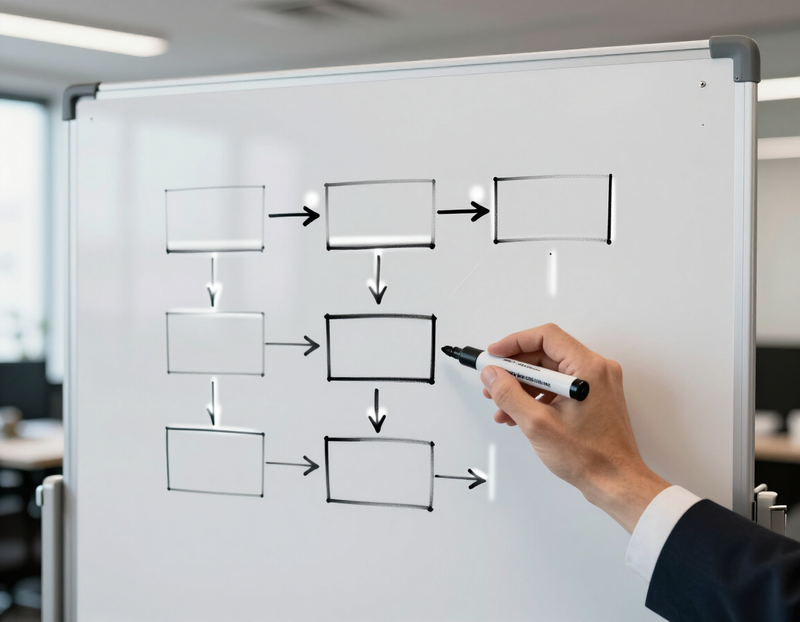
The storyboard is where the document becomes pictures. We start from what the learner should be able to do afterward. That one outcome sets the length, and a topic that carries more than one outcome usually becomes more than one module. We plan the parts with the subject-matter expert before anyone picks up a camera, so each module has a clear start and end.
Here is the structure we would fill in with the real project. It shows only how the mapping works. It contains no invented procedure.
| Written step | Scene in the storyboard | Shot or picture needed | On-screen text | Confirmed by |
|---|---|---|---|---|
| [TYLER TO CONFIRM: step 1 from the document] | [TYLER TO CONFIRM] | [TYLER TO CONFIRM] | [TYLER TO CONFIRM] | [TYLER TO CONFIRM: reviewer] |
| [TYLER TO CONFIRM: step 2] | [TYLER TO CONFIRM] | [TYLER TO CONFIRM] | [TYLER TO CONFIRM] | [TYLER TO CONFIRM] |
| [TYLER TO CONFIRM: step 3] | [TYLER TO CONFIRM] | [TYLER TO CONFIRM] | [TYLER TO CONFIRM] | [TYLER TO CONFIRM] |
Two planning choices are part of how we work, and the finished post should say whether they applied:
- Scenes are modular, so one step can be replaced without re-editing the whole series.
- On-screen text is kept separate from the footage, so a changed number or step name can be edited without refilming.
For this project:
- [TYLER TO CONFIRM: how many modules the procedure was split into and why]
- [TYLER TO CONFIRM: what the storyboard review changed]
Stage three: filming the module
Filming a procedure means filming it where and how it is done. We ask who will appear, which site or shift is the main example, what the access and safety rules are, and what is loud, so we can record around it. Live operations need their own plan for noise, safe movement and who is on camera, and that plan is agreed with the client's site lead before the shoot.
For this project:
- [TYLER TO CONFIRM: where the filming took place, in general terms]
- [TYLER TO CONFIRM: who appeared on camera and how they were chosen]
- [TYLER TO CONFIRM: the access rules and anything that changed on the day]
We do not describe footage or conditions here that were not recorded in the project notes.

Review and sign-off
Before a training video is used, the subject-matter expert confirms the steps are correct and in order. A safety, HR or compliance reviewer confirms the video matches company policy. We agree in advance who these people are, how drafts reach them and who gives final approval.
- [TYLER TO CONFIRM: who reviewed on the client side, by role only]
- [TYLER TO CONFIRM: what was corrected and how many review rounds actually occurred]
We are not stating a number of revisions or a turnaround. Those come from the project record.
Captions, text and clear audio
Many people watch training without sound, so captions and readable on-screen text matter. We plan text large enough for a small screen and held long enough to read, and we check specialized terms with the subject-matter expert.
- [TYLER TO CONFIRM: whether captions or transcripts were delivered]
- [TYLER TO CONFIRM: how specialized terms were checked]
The finished module
- [TYLER TO CONFIRM: what was delivered, in which formats and for which learning system]
- [TYLER TO CONFIRM: whether the client plans to update it and how the modular scenes helped]
Quizzes, sign-offs and completion tracking belong to the client's learning system or supervisors, not the video. We do not claim that any module improved performance, safety or retention unless the client has measured it and agreed that we may say so.
Publication checklist for the editor
- The client has given written permission and approved the wording
- Every marker is replaced with verified material, or its section is removed
- Nothing confidential from the procedure or site is shown or described
- No result, saving, completion rate or performance gain appears without a client-supported source
- Every image is real project material with permission, or clearly labeled as an illustration
- The title is still accurate for what the project really is
The next step
If you have a written procedure and want to turn it into video, start with the task and the person who knows it best. Our training video page describes how we plan modules, and our corporate video production page shows the range of business work we do.